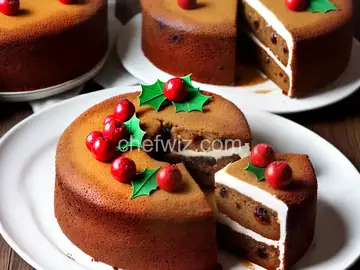
Fanouropita (Cake For Lost Things) Recipe
Rate this recipeBe the first to rate
 By AprilPublished
 In Greek culture, food is more than just sustenance. It's a way to celebrate, connect, and even find what's lost.
 By AprilPublished
 In Greek culture, food is more than just sustenance. It's a way to celebrate, connect, and even find what's lost.
Position oven rack in the middle and preheat oven to 350°F.
Grease the pan with olive oil and lightly sprinkle with flour, removing any excess.
In a large bowl, combine flour, baking powder, cinnamon, salt, and sugar. Whisk them together.
Add olive oil, orange juice, and vanilla to the dry ingredients. Stir until well combined. The batter will be thick.
Pour the batter into the prepared pan.
Bake for approximately 45 minutes, or until the cake turns golden and a toothpick inserted into the center comes out clean.
Allow the cake to cool for 10 minutes, then remove the springform and transfer the cake to a wire rack to cool completely.
Before serving, sprinkle some confectioners sugar on top of the cake.
In Greek culture, food is more than just sustenance. It's a way to celebrate, connect, and even find what's lost. One such tradition is the baking of Fanouropita, a special cake made to honor Saint Fanourios and help locate lost items.
Saint Fanourios is a lesser-known saint in the Greek Orthodox Church, but his story is captivating. As the legend goes, Fanourios was a young man who lived during the 3rd century. He was a devout Christian who faced many trials and temptations in his life.
One day, Fanourios was approached by a stranger who asked him to carry a heavy sack. Unbeknownst to Fanourios, the sack contained the icon of Saint Fanourios, which had been lost for many years. As he carried the burden, Fanourios was tempted by the devil to abandon his faith. However, he persevered and eventually returned the icon to its rightful place.
In honor of his devotion, Fanouropita was created as a sweet offering to Saint Fanourios. It is believed that by baking and sharing this cake, one can seek his intercession to find lost things or resolve unanswered prayers.
Fanouropita is more than just a cake; it is a symbol of hope and faith. The ingredients used in the cake hold significant meaning:
Just as flour is the foundation of the cake, faith is the foundation of our relationship with Saint Fanourios. It is through faith that we seek his help in finding what's lost.
Olive oil represents the light of Saint Fanourios guiding us in our search. It is a reminder that even in the darkest times, there is always hope.
Sugar represents the sweetness of finding what was lost. It is a celebration of the joy and relief that comes when we discover what we've been searching for.
These spices add warmth and depth to the cake, symbolizing the comfort and solace we find when our prayers are answered and our lost things are found.
Baking Fanouropita is a simple yet meaningful process. It starts with gathering the ingredients and preparing the batter. As the cake bakes, the sweet aroma fills the air, creating a sense of anticipation and hope.
Once the cake is ready, it is blessed by a priest or offered in prayer to Saint Fanourios. It is then shared with loved ones, neighbors, and even strangers, spreading the tradition and the hope it brings.
Whether you believe in the power of Saint Fanourios or not, baking Fanouropita is a beautiful way to honor a centuries-old tradition and celebrate the interconnectedness of faith, culture, and food.
Fanouropita is more than just a cake; it's a symbol of hope, faith, and the power of tradition. Whether you're searching for lost things, celebrating answered prayers, or simply seeking connection, baking and sharing Fanouropita is a beautiful way to honor the past, celebrate the present, and embrace the future.
While the power of Fanouropita lies in the belief and faith it represents, many people have shared stories of finding lost items after baking and sharing the cake. It may be worth a try!
Absolutely! The tradition of Fanouropita has deep religious roots, but you can adapt the recipe and bake the cake as a symbol of hope and celebration without the religious significance.
Don't worry! You can always make substitutions or get creative with the ingredients you have on hand. The most important thing is the intention and symbolism behind the cake.
Absolutely! Fanouropita is a beautiful tradition that can be shared with anyone, regardless of their cultural background. It's a way to connect, celebrate, and spread hope.
Yes, you can! If you have leftover cake or want to make it in advance, you can wrap it tightly and freeze it for later. Just make sure to thaw it properly before serving.
Yes, you can adapt the recipe to make it gluten-free by using alternative flours like almond flour or gluten-free baking mixes. The taste and texture may vary slightly, but the symbolism remains the same.
While finding lost items is the primary purpose, Fanouropita can also be baked to celebrate answered prayers, as a symbol of hope, or as a way to honor Saint Fanourios and his story.
Absolutely! Feel free to add your own twist to the recipe, whether it's adding nuts, dried fruits, or even a glaze. The important thing is to make it meaningful to you.
AprilCook, recipe developer and the heart of Chefwiz. More about April