Espagnole Sauce
Rate this recipeBe the first to rate
 By AprilPublished
 Are you tired of serving the same mundane dishes to your family and friends?
 By AprilPublished
 Are you tired of serving the same mundane dishes to your family and friends?
In a 3-quart heavy saucepan, melt butter over moderate heat.
Add carrots and onions to the saucepan and cook, stirring occasionally, until they turn golden in color, which usually takes around 7 to 8 minutes.
Sprinkle flour into the saucepan and continue cooking the mixture, stirring constantly, until the flour is medium brown, which typically takes about 6 to 10 minutes.
Pour hot stock into the saucepan in a fast stream, while whisking constantly to prevent any lumps from forming.
Add tomato purée, garlic, celery, peppercorns, and bay leaf to the saucepan and stir well.
Bring the mixture to a boil while continuing to stir.
Reduce the heat and let the mixture simmer, uncovered, stirring occasionally, until it is reduced to approximately 3 cups. This usually takes around 45 minutes.
Using a fine-mesh sieve, strain the sauce into a bowl, discarding any solids.
Please note that the stock referred to in the recipe requires a dilution ratio of 1:16. This means that you will need to mix 1/4 cup of the stock concentrate with 4 cups of water. The stock concentrate can be found at specialty foods shops or cooking.com.
Are you tired of serving the same mundane dishes to your family and friends? Do you long to create culinary masterpieces that leave a lasting impression? Look no further than Espagnole sauce, the secret ingredient that will take your cooking to new heights. In this article, we will explore what makes Espagnole sauce so special and how you can use it to effortlessly elevate your dishes.
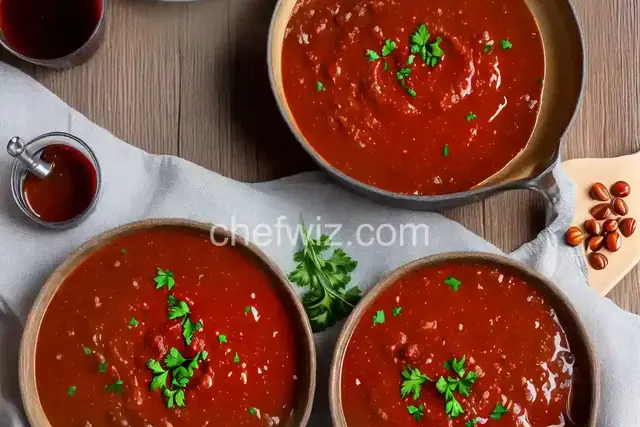
Imagine a rich, velvety sauce that adds depth and complexity to any dish it touches. That's Espagnole sauce for you. Known as one of the five mother sauces in classical French cuisine, Espagnole sauce forms the base for a variety of delicious sauces. It is made by combining a dark brown roux with a flavorful brown stock, resulting in a sauce that is both savory and indulgent.
The name "Espagnole" might lead you to believe that this sauce originated in Spain. However, its name actually pays homage to the Spanish influence in French cuisine. In the 17th century, French cooking was heavily influenced by Spanish culinary techniques. The term "Espagnole" was used to refer to anything that was cooked in the Spanish style, and hence, this sauce got its name.
The versatility of Espagnole sauce is truly remarkable. It serves as the foundation for a myriad of classic French sauces, including demi-glace, bordelaise, and mushroom sauce. Whether you're cooking up a succulent steak, a creamy pasta dish, or a delectable roast, Espagnole sauce can be the secret weapon in your culinary arsenal.
Making Espagnole sauce may sound daunting, but with a little practice, you'll soon be whipping it up like a pro. The key is to start with a well-made brown stock and a perfectly cooked roux. Once you have these two components ready, the rest is a breeze. Combine the roux and stock, simmer until the flavors meld together, and voila! You have a luscious Espagnole sauce ready to transform your dishes.
If you're short on time or prefer the convenience of ready-made products, you can find Espagnole sauce in gourmet food stores or online. However, nothing beats the satisfaction of making your own sauce from scratch. The aroma that fills your kitchen and the pride that comes from creating something delicious from scratch are priceless.
Using Espagnole sauce in your cooking is like adding a secret touch of elegance. It elevates the flavors of your dishes, turning ordinary meals into extraordinary experiences. The depth and richness it brings to your culinary creations will leave your guests in awe and have them begging for seconds.
Espagnole sauce is the culinary secret that can take your cooking to new heights. With its rich flavor and versatility, it can transform even the simplest of dishes into gourmet delights. So, why settle for ordinary when you can create extraordinary? Embrace the magic of Espagnole sauce and unleash your inner gourmet chef.
Yes, you can freeze Espagnole sauce for future use. Ensure you store it in an airtight container and thaw it in the refrigerator before reusing.
Espagnole sauce has a distinct flavor profile that is difficult to replicate. While you can experiment with other sauces, using Espagnole sauce will give your dishes an unparalleled depth of flavor.
Traditionally, Espagnole sauce is made with a roux, which contains wheat flour. However, you can make a gluten-free version by using a gluten-free flour as a substitute.
Yes, you can make a vegetarian version of Espagnole sauce by using vegetable stock and omitting any meat-based ingredients.
Espagnole sauce can be stored in the refrigerator for up to 5 days. Make sure to keep it in a sealed container to maintain its freshness.
While Espagnole sauce is traditionally used in meat-based dishes, you can certainly experiment with it in seafood dishes. It adds a bold and robust flavor that complements various seafood preparations.
Absolutely! If you prefer a thinner sauce, you can add a little more stock. Conversely, if you want a thicker sauce, you can simmer it for a longer duration to reduce the liquid.
Definitely! You can infuse Espagnole sauce with your favorite herbs, spices, or even a splash of wine to enhance its flavor and make it your own.
AprilCook, recipe developer and the heart of Chefwiz. More about April