Egg Custard Tarts
Rate this recipeBe the first to rate
 By AprilPublished
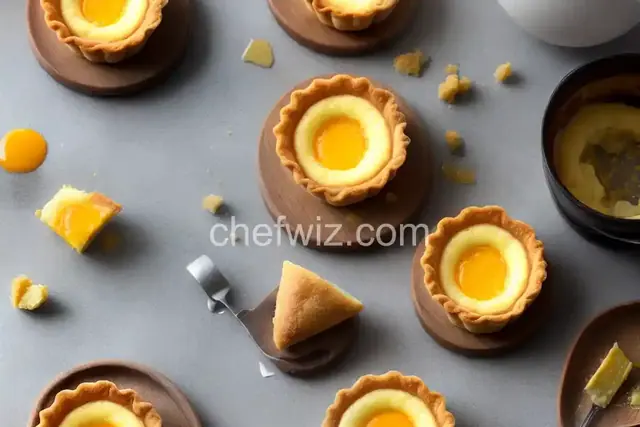
 Egg custard tarts, the epitome of indulgence and comfort, are a beloved treat enjoyed by many.
 By AprilPublished
 Egg custard tarts, the epitome of indulgence and comfort, are a beloved treat enjoyed by many.
In a medium bowl, cut the butter into 3/4 cup flour using a fork. Then, knead the mixture with your hands until the dough comes together.
Transfer the "oil dough" to a piece of plastic wrap and shape it into a 7 1/2-inch square. Wrap it in the plastic wrap and refrigerate for 20 minutes.
In a separate bowl, mix the egg, water, and remaining 3/4 cup flour. Knead the mixture with your hands until the dough comes together. Add more flour if needed to reduce stickiness.
Transfer the "water dough" to a piece of plastic wrap and wrap it in the plastic wrap. Refrigerate for 20 minutes.
Unwrap the "water dough" and roll it out into an 11-inch square on a lightly floured surface.
Place the "oil dough" square on top of the rolled-out "water dough" in a diamond shape. Fold the sides of the "water dough" over the "oil dough" to completely enclose it.
Roll out the folded dough into an 11-inch square and divide it into thirds. Fold the outer thirds over the center third, similar to folding a letter. Repeat this process twice, refrigerating the dough if it becomes too soft.
Divide the square of dough into fourths. Fold the outer fourths into the center, then
Egg custard tarts, the epitome of indulgence and comfort, are a beloved treat enjoyed by many. Whether you're a fan of the flaky crust or the creamy custard filling, these tarts are sure to satisfy your sweet tooth. In this article, we'll dive into the world of egg custard tarts, exploring their history, variations, and the joy they bring to our taste buds. So, let's get started!
Have you ever wondered where egg custard tarts originated from? These delectable treats have a rich history that dates back centuries. In fact, they can be traced back to the medieval period in Europe. The Portuguese were the first to introduce these tarts, and they quickly gained popularity across the continent. Today, you can find variations of egg custard tarts in different cultures, each with its own unique twist.
One of the highlights of egg custard tarts is the combination of a flaky crust and a luscious custard filling. The crust provides a delightful crunch, while the custard melts in your mouth with its creamy texture. It's a match made in dessert heaven! The contrast of textures creates a symphony of flavors that will leave you craving for more.
As egg custard tarts made their way around the world, each culture added its own unique touch to the classic recipe. In Hong Kong, you'll find the famous "dan tat" with its smooth custard and caramelized top. In Britain, the custard is often flavored with nutmeg or vanilla, adding an extra layer of aromatic goodness. No matter which variation you try, you're in for a delightful treat!
If you're feeling adventurous and want to try your hand at making egg custard tarts at home, you're in for a fun and rewarding experience. While it may seem intimidating at first, with a little patience and practice, you'll be able to recreate these heavenly treats in your own kitchen. Just imagine the aroma of freshly baked tarts wafting through your home!
Before you embark on your egg custard tart adventure, here are a few tips to help you along the way:
By following these tips, you're sure to impress your friends and family with your homemade egg custard tarts!
Egg custard tarts are a delightful treat that brings joy to our taste buds. From their humble origins to the numerous variations around the world, these tarts have captured the hearts of dessert lovers everywhere. Whether you choose to enjoy them warm or cold, homemade or store-bought, there's no denying the sheer indulgence that comes with every bite. So, go ahead, treat yourself to a heavenly egg custard tart and savor the magic!
Absolutely! While homemade crust adds an extra touch, store-bought crust can be a convenient option.
Egg custard tarts are best enjoyed fresh, but they can be stored in an airtight container for up to two days.
Yes, you can freeze egg custard tarts. Just make sure to wrap them tightly to prevent freezer burn.
While traditional egg custard tarts use whole milk, you can experiment with different types of milk, such as almond or coconut milk, for a unique flavor.
Absolutely! Feel free to add a dash of vanilla extract, nutmeg, or even a hint of lemon zest to elevate the flavor of your custard.
Yes, you can make mini egg custard tarts by using a muffin tin. They make for adorable bite-sized treats!
Yes, egg custard tarts are vegetarian-friendly as they do not contain any meat or animal by-products.
Egg custard tarts can be enjoyed both warm and cold. It's a matter of personal preference!
Absolutely! A caramelized top adds a delightful crunch and an extra layer of sweetness to your tarts.
AprilCook, recipe developer and the heart of Chefwiz. More about April