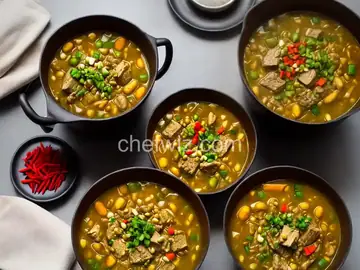
Eba & egusi soup???
Rate this recipeBe the first to rate
 By AprilPublished
 When it comes to Nigerian cuisine, there are few combinations as beloved as eba and egusi soup.
 By AprilPublished
 When it comes to Nigerian cuisine, there are few combinations as beloved as eba and egusi soup.
Start by blending the tomato, red bell pepper, scotch pepper, and onion.
Add the blended mixture into a pot on heat.
Add palm oil to the pot and fry for a few minutes.
Pour in water and allow it to boil.
Add salt, maggi, onga, and fish to the pot.
Cook the mixture well.
Peel and crush the garlic and ginger, then add them into the soup.
When the soup starts to thicken, add in the egusi and cook for 5 minutes.
Add the chopped spinach and cook for another 5 minutes.
For the eba, boil water in a separate pot, but not too much.
Turn off the heat and gradually add garri to the pot while stirring until it thickens.
Scoop out the eba and serve.
Enjoy your meal!
When it comes to Nigerian cuisine, there are few combinations as beloved as eba and egusi soup. This dynamic duo is not only a staple in Nigerian households, but it also holds a special place in the hearts of food lovers around the world. In this article, we will explore the unique flavors and cultural significance of eba and egusi soup, as well as provide answers to some commonly asked questions about this delightful pairing.
Eba, also known as garri, is a popular Nigerian staple made from cassava. It is a versatile food that can be enjoyed with a variety of soups and stews. The process of making eba involves grinding cassava into a fine powder, which is then cooked with hot water to form a dough-like consistency. The result is a fluffy and slightly sour dish that serves as the perfect accompaniment to egusi soup.
Egusi soup is a rich and flavorful Nigerian soup made from ground melon seeds. It is typically cooked with various vegetables, meats, and spices to create a hearty and satisfying dish. The melon seeds give the soup a thick and creamy texture, while the combination of spices adds a depth of flavor that is hard to resist. Egusi soup is known for its versatility, as it can be enjoyed with eba, pounded yam, or rice.
Eba and egusi soup are a match made in culinary heaven. The soft and fluffy texture of eba complements the thick and creamy consistency of egusi soup, creating a delightful contrast of textures. The slightly sour taste of eba balances out the richness of the soup, resulting in a harmonious blend of flavors. Together, eba and egusi soup create a satisfying and comforting meal that will leave you craving for more.
Preparing eba and egusi soup is a labor of love that requires time and attention to detail. The process begins with grinding the cassava into a fine powder and cooking it with hot water to form the eba. Meanwhile, the egusi seeds are ground and cooked with a variety of vegetables, meats, and spices to create the soup. The final step is serving the eba alongside the egusi soup, allowing the flavors to meld together for a truly unforgettable dining experience.
In addition to their delicious flavors, eba and egusi soup also offer a range of health benefits. Eba is a good source of carbohydrates, providing the body with the energy it needs to function properly. It is also rich in fiber, which aids in digestion and helps maintain a healthy weight. Egusi soup, on the other hand, is packed with essential nutrients such as vitamins, minerals, and antioxidants. It is particularly rich in protein, which is essential for building and repairing tissues in the body.
Eba and egusi soup are more than just a meal; they are a celebration of Nigerian culture and culinary expertise. The combination of fluffy eba and creamy egusi soup creates a symphony of flavors and textures that is hard to resist. Whether you are a Nigerian food enthusiast or simply looking to explore new cuisines, eba and egusi soup are a must-try. So why not indulge in this delectable pairing and experience a taste of Nigeria?
While cassava is the traditional ingredient used to make eba, you can also find instant eba mixes made from other grains or even potatoes.
Egusi soup is often cooked with meat or fish, but you can easily make a vegetarian version by omitting the animal products and adding extra vegetables or tofu.
Yes, egusi soup can be frozen for later consumption. Just make sure to store it in an airtight container and thaw it properly before reheating.
Eba can be enjoyed with a variety of Nigerian soups and stews, such as okra soup, ogbono soup, or vegetable soup.
The level of spiciness in egusi soup can vary depending on personal preference. You can adjust the amount of spices used to suit your taste.
Absolutely! Egusi soup is highly customizable, and you can add your favorite meats, vegetables, or spices to enhance the flavor.
The preparation time for eba and egusi soup can vary, but on average, it takes about 1-2 hours to make both dishes from start to finish.
Yes, different regions in Nigeria may have their own unique variations of eba and egusi soup, with slight differences in ingredients or cooking methods.
AprilCook, recipe developer and the heart of Chefwiz. More about April