Dry-Aged Standing Rib Roast with Sage Jus
Rate this recipeBe the first to rate
 By AprilPublished
 Are you ready to elevate your culinary skills and impress your guests with a mouthwatering dry-aged standing rib roast?
 By AprilPublished
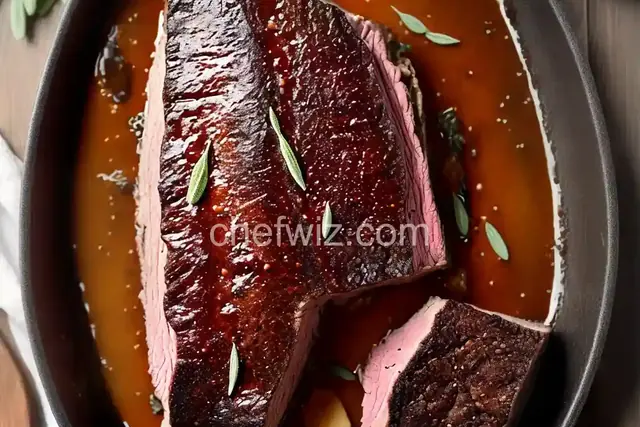
 Are you ready to elevate your culinary skills and impress your guests with a mouthwatering dry-aged standing rib roast?
Remove any plastic wrapping or butcher's paper from the roast.
Place the standing rib roast upright on a half sheet pan with a rack for drainage.
Place dry towels loosely on top of the roast to draw moisture away from the meat.
Put the roast in the refrigerator at 50 to 60 percent humidity and between 34 and 38 degrees F. Use a refrigerator thermometer to measure both.
Change the towels daily for 3 days.
Put a 16-inch round azalea terra cotta planter in a cold oven.
Invert the planter to act as a lid over a pizza stone or the bottom of the planter.
Start the oven at 250 degrees F to prevent cracking in the terra cotta pieces.
Remove the roast from the refrigerator and rub with canola oil, making sure to rub the bones as well.
Completely coat the roast with kosher salt, using about half a teaspoon per bone.
Rub the surface with freshly ground pepper.
Place the roast over a slightly smaller glass bake-ware dish to catch drippings for the sauce.
Insert a probe thermometer into the center of the roast, setting it for 118 degrees F.
Put the roast and the bake-ware dish on the pizza stone, cover with the terra cotta pot, and return to the oven.
Reduce the oven temperature to 200 degrees F and
Are you ready to elevate your culinary skills and impress your guests with a mouthwatering dry-aged standing rib roast? Look no further! In this article, we will delve into the art of dry aging and explore the tantalizing flavors of this classic dish. Get ready to tantalize your taste buds and discover the secrets behind creating the perfect sage jus to complement your roast.
Imagine a piece of meat that has been carefully aged in a controlled environment, allowing the natural enzymes to break down the muscle fibers and intensify the flavor. Dry aging is a process that involves hanging the meat in a temperature and humidity-controlled room for several weeks, resulting in a tender and richly flavored cut.
Just like a fine wine, dry-aged meat develops complex flavors and a unique texture that cannot be replicated. The moisture in the meat evaporates during the aging process, concentrating the flavors and creating a beautiful marbling effect. When cooked, the meat becomes incredibly tender, juicy, and full of depth, offering a dining experience like no other.
When it comes to choosing the ideal standing rib roast, quality is key. Look for a well-marbled piece of meat with a thick layer of fat on top. The marbling adds flavor and tenderness, while the fat helps to keep the meat moist during the cooking process.
Opt for a bone-in roast, as the bone adds flavor and helps to retain moisture. Additionally, the bone acts as a natural roasting rack, allowing the heat to circulate evenly and ensuring a perfectly cooked roast.
Before cooking your dry-aged standing rib roast, it is essential to bring it to room temperature. Allowing the meat to sit at room temperature for about an hour ensures even cooking and prevents the center from remaining cold.
Season the roast generously with salt and pepper, or your favorite herb rub, to enhance the flavors. You can also add minced garlic or rosemary for an extra aromatic touch.
No roast is complete without a delicious sauce to accompany it. The sage jus is a perfect match for the rich flavors of the dry-aged standing rib roast. Here's how you can create this delightful sauce:
Preparing a dry-aged standing rib roast with sage jus is an art form that combines time, patience, and attention to detail. The result is a succulent and flavorful dish that will impress even the most discerning palates. So, why not embark on this culinary adventure and savor the taste of perfection?
The recommended duration for dry aging a standing rib roast is typically around 21 to 28 days. This allows for optimal flavor development and tenderness.
While it is possible to dry age a roast at home, it requires proper temperature and humidity control. It is advisable to consult professional butchers or specialized equipment for the best results.
The recommended internal temperature for a medium-rare standing rib roast is around 135°F (57°C).
Fresh sage leaves are recommended for the best flavor and aroma. However, if fresh sage is not available, you can use dried sage as a substitute, but the flavor may be slightly different.
Classic accompaniments to a standing rib roast include roasted potatoes, Yorkshire pudding, steamed vegetables, and a fresh green salad.
Absolutely! The sage jus pairs well with various meat dishes, including roasted chicken, pork tenderloin, and lamb chops.
To store leftover roast, wrap it tightly in plastic wrap or aluminum foil and refrigerate. The sage jus can be stored in an airtight container in the refrigerator. Both can be enjoyed within 3-4 days.
Yes, you can freeze both the roast and the sage jus. Ensure they are properly wrapped and sealed to maintain their quality. The roast can be frozen for up to 3 months, while the sage jus can be frozen for up to 1 month.
AprilCook, recipe developer and the heart of Chefwiz. More about April