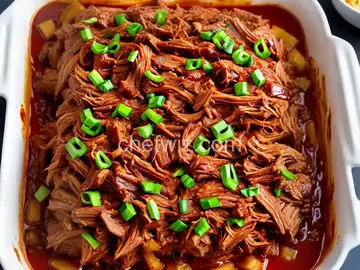
Dong Po (Chinese Pork Belly)
Rate this recipeBe the first to rate
 By AprilPublished
 Who doesn't love a succulent piece of pork belly? Dong Po, a traditional Chinese dish, takes this cut of meat to a whole new level of deliciousness.
 By AprilPublished
 Who doesn't love a succulent piece of pork belly? Dong Po, a traditional Chinese dish, takes this cut of meat to a whole new level of deliciousness.
Cut the pork belly into strips that are 2 inches wide.
In a large pot, bring water to a boil and add the pork slices. Reduce the heat to a simmer and cook the meat for 10 minutes.
Remove the pork from the water and pat it dry with paper towels.
Heat vegetable oil in a large wok over medium-high heat. Brown the pork strips on all sides. Use a splatter shield to protect yourself from the splattering pork.
While the pork is browning, combine light soy sauce, dark soy sauce, rice wine, rock sugar, ginger, and spring onions in a large soup pot or stockpot.
Bring the mixture to a boil, stirring until the sugar is dissolved. Reduce the heat to a gentle simmer.
Place the pork strips in the liquid, cover the pot, and simmer for 1 1/2 to 2 hours until the meat is very tender. Add water as needed to prevent the liquid from drying out completely.
If you cannot find Chinese rock sugar, you can substitute it with brown sugar.
Adding a dash of five-spice powder is optional but adds a delicious flavor. You can also stir-fry vermicelli with some of the remaining liquid and serve the pork on top.
Who doesn't love a succulent piece of pork belly? Dong Po, a traditional Chinese dish, takes this cut of meat to a whole new level of deliciousness. In this article, we'll explore the origins of Dong Po, the cooking technique behind it, and why it has become such a beloved dish. So, grab your apron and let's dive in!
Legend has it that Dong Po, a renowned poet and scholar from the Song Dynasty, accidentally discovered this amazing dish. While cooking pork belly one day, he got so engrossed in his writing that he forgot about the meat simmering on the stove. Hours later, he uncovered a rich, tender, and flavorful piece of pork belly that was unlike anything he had ever tasted before.
Impressed with the results, Dong Po named this dish after himself and shared it with friends and family. Word quickly spread, and soon Dong Po became famous not only for his literary works but also for his delectable pork belly.
So, what makes Dong Po pork belly so special? It's all in the cooking technique. The pork belly is first marinated in a flavorful mixture of soy sauce, ginger, garlic, and spices. It is then slowly braised in a mixture of Shaoxing wine, rock sugar, and soy sauce for several hours until the meat is tender and the fat has rendered down.
The slow braising process allows the flavors to meld together, resulting in a melt-in-your-mouth texture and a rich, savory taste. The fat in the pork belly also adds a lusciousness to the dish, making it incredibly indulgent.
Over the centuries, Dong Po pork belly has become a staple in Chinese cuisine. It is often served during special occasions and family gatherings, as its richness and depth of flavor make it a true crowd-pleaser.
What sets Dong Po pork belly apart from other pork belly dishes is its balance of flavors and textures. The tender meat, coupled with the gelatinous fat, creates a harmonious contrast that is both satisfying and addictive.
Furthermore, Dong Po pork belly has gained international recognition and is now enjoyed by food enthusiasts all over the world. Its popularity can be attributed to its unique taste, cultural significance, and the artistry involved in its preparation.
Dong Po, the legendary Chinese pork belly dish, has captivated the taste buds of many with its tender meat and rich flavors. The accidental discovery by Dong Po himself has turned this dish into a culinary masterpiece that is cherished by people from all walks of life.
So, the next time you're craving something indulgent, why not try your hand at making Dong Po pork belly? Transport yourself to ancient China and savor the flavors that have stood the test of time.
The best cut of pork for Dong Po is pork belly. Its high fat content and marbling make it perfect for the slow braising process, resulting in a tender and flavorful dish.
Yes, if you can't find Shaoxing wine, you can use dry sherry or rice wine as a substitute. However, keep in mind that the flavor may be slightly different.
The braising process typically takes around 2-3 hours. It's important to cook the pork belly slowly over low heat to ensure the meat becomes tender and the fat renders down.
Yes, Dong Po pork belly can be made in advance. In fact, it tastes even better the next day as the flavors have more time to develop. Simply reheat it gently on the stove or in the oven before serving.
Dong Po pork belly pairs well with steamed rice or buns. The soft texture of the rice or the pillowy buns complements the rich flavors of the pork belly perfectly.
Yes, you can freeze Dong Po pork belly. Allow it to cool completely, then store it in an airtight container or freezer bag. It can be kept in the freezer for up to 3 months.
While Dong Po pork belly is traditionally made with pork belly, you can adapt the braising technique to other cuts of meat, such as beef brisket or chicken thighs. The cooking time may vary, so adjust accordingly.
Yes, there are variations of Dong Po pork belly. Some recipes may include additional ingredients like star anise, cinnamon, or dried tangerine peel to enhance the flavors. Feel free to experiment and make it your own!
AprilCook, recipe developer and the heart of Chefwiz. More about April