Dinner Tonight: Korean Barbecue Beef Bulgogi Recipe
Rate this recipeBe the first to rate
 By AprilPublished
 Are you tired of the same old dinner options? Looking for a dish that will transport your taste buds to a whole new world of flavors?
 By AprilPublished
 Are you tired of the same old dinner options? Looking for a dish that will transport your taste buds to a whole new world of flavors?
In a large bowl, combine soy sauce, sugar, sesame oil, mirin, onion, garlic, ginger, sesame seeds, and black pepper. Whisk the ingredients together until they are well mixed.
Add the meat to the bowl and coat it with the marinade. Cover the bowl and place it in the refrigerator for 30 minutes.
Heat a grill pan or a large iron skillet over high heat.
Remove the meat from the marinade and place it in the hot pan. Cook the meat for a few minutes on each side until it is nicely browned.
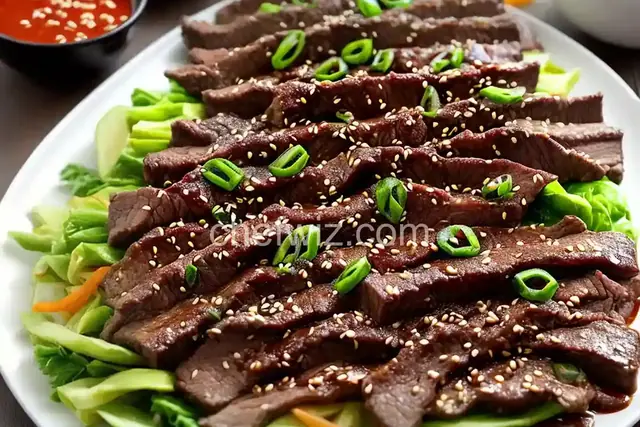
Serve the cooked beef with lettuce, white rice, kimchi, and hot bean paste.
Are you tired of the same old dinner options? Looking for a dish that will transport your taste buds to a whole new world of flavors? Look no further than Korean Barbecue Beef Bulgogi. This delicious and savory dish is sure to satisfy your cravings and leave you wanting more.
Bulgogi is a traditional Korean dish that consists of thinly sliced beef marinated in a flavorful combination of soy sauce, sugar, garlic, and sesame oil. The word "bulgogi" literally translates to "fire meat," which refers to the method of cooking the beef over an open flame or grill. The result is tender, juicy meat with a slightly charred and caramelized exterior.
The key to a delicious bulgogi lies in its marinade. The combination of soy sauce, sugar, garlic, and sesame oil creates a perfect balance of sweet, salty, and savory flavors. The marinade not only infuses the beef with its delicious taste but also helps to tenderize the meat, making it incredibly tender and juicy.
Imagine biting into a tender piece of beef that is bursting with a symphony of flavors. The salty umami from the soy sauce, the sweetness from the sugar, the pungent aroma of garlic, and the nutty richness of sesame oil all come together to create a taste sensation like no other. Each bite is an explosion of flavors that will leave you craving for more.
The grilling process is an essential part of creating the perfect bulgogi. The open flame or grill imparts a smoky charred flavor to the beef, adding another layer of complexity to the dish. The caramelization of the marinade creates a beautiful crust on the exterior of the meat, which adds a delightful crunch to every bite.
Bulgogi is not just a delicious dish; it is also a social experience. Traditionally, bulgogi is cooked and eaten at the table, with everyone sharing from a communal grill. This communal dining experience brings people together and creates a sense of connection and camaraderie. So gather your friends and family, fire up the grill, and enjoy a memorable evening filled with laughter and good food.
To ensure your bulgogi turns out perfectly every time, here are some tips to keep in mind:
Korean Barbecue Beef Bulgogi is a dish that combines the bold flavors of Korean cuisine with the joy of grilling. It is a dish that brings people together and creates lasting memories. So why not spice up your dinner routine and give Bulgogi a try? Your taste buds will thank you.
Yes, while beef is the traditional choice, you can also use pork or chicken for Bulgogi. Just make sure to adjust the cooking time accordingly.
Absolutely! While grilling adds a smoky flavor, you can also cook Bulgogi on a stovetop or in the oven. Simply sear the marinated meat in a hot pan until cooked through.
The marinade is an essential component of Bulgogi as it adds flavor and tenderizes the meat. Skipping the marinade will result in a less flavorful and less tender dish.
For the best flavor, marinate the beef for at least 1 hour. However, if you have more time, marinating it overnight will result in an even more flavorful dish.
Yes, you can make a vegetarian version of Bulgogi using tofu or mushrooms as a substitute for the meat. Marinate them in the same sauce and cook as you would with the meat.
While the traditional marinade is delicious on its own, you can also serve Bulgogi with Korean barbecue sauce, ssamjang (a spicy soybean paste), or gochujang (a spicy red pepper paste).
Yes, you can freeze leftover Bulgogi for up to 3 months. Just make sure to store it in an airtight container or freezer bag.
While Bulgogi is traditionally served without vegetables, you can add sliced onions, bell peppers, or mushrooms to the marinade for added flavor and texture.
AprilCook, recipe developer and the heart of Chefwiz. More about April