Danmuji (Korean Pickled Daikon Radish) Recipe
Rate this recipeBe the first to rate
 By AprilPublished
Are you looking for a tangy and refreshing addition to your meals?
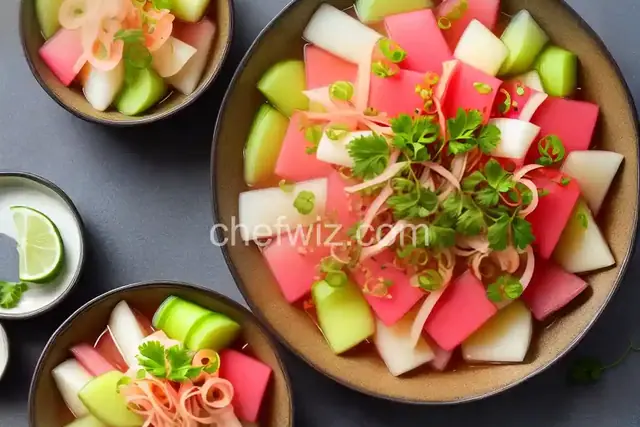 By AprilPublished
Are you looking for a tangy and refreshing addition to your meals?
In a medium saucepan, combine water, vinegar, sugar, salt, garlic, turmeric, peppercorns, and bay leaves.
Heat the mixture over medium-high heat, stirring until the sugar is completely dissolved.
Once boiling, remove the saucepan from heat and add the daikon.
Place a paper towel directly on top of the brine and allow it to cool to room temperature, which typically takes about 1 to 2 hours.
Transfer the pickles and brine into an airtight glass container.
Store the container in the refrigerator, as the turmeric may stain plastic containers.
These pickles can be refrigerated for up to 1 month.
Are you looking for a tangy and refreshing addition to your meals? Look no further than Danmuji, the traditional Korean pickled daikon radish. With its vibrant yellow color and crisp texture, Danmuji not only adds visual appeal to your plate but also bursts with a delightful mix of flavors.
Pickling is an age-old technique used to preserve fruits and vegetables. It involves immersing the ingredients in a brine solution or vinegar, which enhances their taste and extends their shelf life. In the case of Danmuji, daikon radishes are pickled to create a zesty side dish that complements a wide range of Korean dishes.
At the heart of Danmuji lies the daikon radish, a versatile vegetable known for its mild flavor and crisp texture. This elongated white radish adds a refreshing crunch to any dish it accompanies. When pickled, the daikon radish undergoes a transformative journey, absorbing the vibrant flavors of the brine and becoming a tangy treat.
What sets Danmuji apart is its unique combination of flavors. The pickling brine, typically made with vinegar, sugar, and salt, infuses the daikon radish with a sweet and sour taste that delights the palate. The tanginess cuts through rich and fatty flavors, making Danmuji the ideal accompaniment to hearty Korean dishes such as bulgogi or bibimbap.
One cannot ignore the mesmerizing yellow color of Danmuji. The secret behind this vibrant hue is the inclusion of turmeric in the pickling process. Turmeric not only adds a beautiful golden shade to the radish but also brings its own health benefits, known for its anti-inflammatory properties and potential antioxidant effects.
When it comes to food, presentation matters. The addition of Danmuji to your plate instantly elevates the visual appeal of your meal. Its bright yellow color contrasts beautifully with other ingredients, creating a visually striking and Instagram-worthy dish.
Danmuji's versatility extends beyond its flavor. Its vibrant color makes it an excellent garnish, adding a pop of color to sandwiches, salads, and sushi rolls. It can also be used as a filling in traditional Korean street food, such as kimbap, providing a burst of flavor in every bite.
Adding Danmuji to your meals is as easy as it gets. Simply slice it up and serve it alongside your favorite Korean dishes. Its tangy taste and crisp texture will complement the flavors and add a refreshing element to your culinary experience.
Proper storage is essential to maintain the quality and taste of Danmuji. It is best stored in an airtight container in the refrigerator, where it can stay fresh for several weeks. However, with its delightful flavors, it is unlikely to last that long!
While daikon radish is the traditional choice for Danmuji, you can experiment with other vegetables such as carrots or cucumbers. However, keep in mind that the flavors and textures may differ.
No, Danmuji is not typically spicy. Its flavor profile leans more towards sweet and tangy rather than spicy. However, you can always add some chili flakes or peppers if you prefer a spicy kick.
Absolutely! Making Danmuji at home is a rewarding experience. You can control the level of sweetness and tanginess to suit your taste preferences. Plus, it's a great way to impress your friends and family with your culinary skills!
Danmuji is commonly available in Korean grocery stores, both in its traditional form and pre-sliced for convenience. Alternatively, you can also find it online, allowing you to enjoy this flavorful condiment wherever you are.
While Danmuji is traditionally served as a side dish, there's no rule against enjoying it on its own. Its tangy and refreshing taste makes it a delightful snack or addition to salads.
As with many pickled foods, Danmuji offers some health benefits. It is a good source of dietary fiber and contains essential vitamins and minerals. However, it's important to consume it in moderation due to its sodium content.
Absolutely! Danmuji's tangy flavor profile makes it a versatile ingredient that can be used in various cuisines. Try adding it to your sandwiches, wraps, or even tacos for a burst of flavor.
Yes, Korean cuisine boasts a wide range of pickled dishes. From kimchi to oi sobagi (stuffed cucumber kimchi), there are plenty of options to explore and add a tangy twist to your meals.
Danmuji, the Korean pickled daikon radish, brings a burst of flavors to your plate. Its tangy and refreshing taste, vibrant yellow hue, and versatility make it a delightful addition to a wide array of dishes. Whether you're a Korean cuisine
AprilCook, recipe developer and the heart of Chefwiz. More about April