Crab Imperial Eggs en Cocotte Recipe
Rate this recipeBe the first to rate
 By AprilPublished
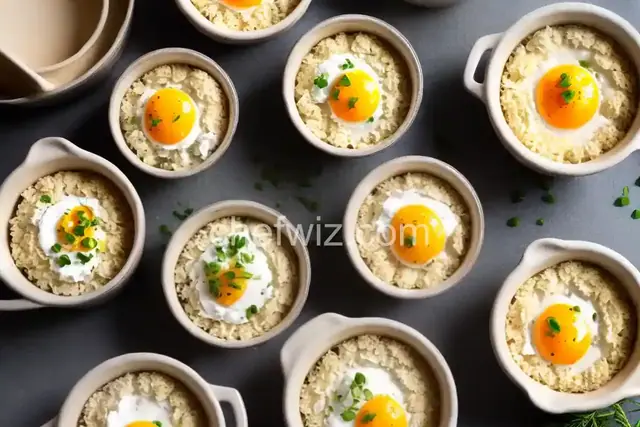
 Imagine waking up to the aroma of a gourmet breakfast, with a dish that combines the richness of crab imperial and the elegance of eggs en cocotte.
 By AprilPublished
 Imagine waking up to the aroma of a gourmet breakfast, with a dish that combines the richness of crab imperial and the elegance of eggs en cocotte.
Preheat the oven to 350°F (175°C).
In a medium bowl, mix the crabmeat, mayonnaise, mustard, parsley, and scallion until well combined. Season with salt and pepper.
Grease 4 (4-ounce) ramekins with butter and sprinkle a little salt on the bottom and sides of each ramekin.
Spoon enough crab mixture into each ramekin to form a thin, even layer. Create a circular depression in the center of the crab mixture in each ramekin.
Carefully crack an egg into each ramekin. Drizzle some heavy cream around each egg and season with salt and pepper.
Place the ramekins in a baking dish and transfer to the preheated oven. Pour enough boiling water into the baking dish to submerge the ramekins about three-quarters of the way.
Bake the eggs en cocotte for approximately 15 minutes, or until the egg whites are just set and the yolks are still slightly jiggly.
Carefully remove the baking dish from the oven.
Using a thin metal spatula and tongs, lift each ramekin out of the hot water. Place the ramekins on a clean kitchen towel to dry the bottoms, then transfer them to plates.
Garnish each ramekin with scallions and a sprinkle of Old Bay seasoning. Serve immediately with to
Imagine waking up to the aroma of a gourmet breakfast, with a dish that combines the richness of crab imperial and the elegance of eggs en cocotte. This Crab Imperial Eggs en Cocotte recipe is a true delight for the senses. In this article, we will explore the wonders of this dish, its origins, and how you can recreate it in your own kitchen. So, let's dive in and discover the magic of Crab Imperial Eggs en Cocotte!
Like many culinary creations, the origins of Crab Imperial Eggs en Cocotte can be traced back to the creative genius of a chef. It combines two classic dishes – Crab Imperial, a rich and creamy crab meat preparation, and Eggs en Cocotte, a French delicacy featuring baked eggs in a ceramic dish. The combination of these two dishes results in a heavenly fusion of flavors and textures.
Crab Imperial, with its velvety texture and delicate flavors, has long been hailed as the king of crab dishes. It originated in the United States and quickly became a favorite in seafood-loving households. The dish typically consists of lump crab meat mixed with a combination of mayonnaise, breadcrumbs, herbs, and spices. The mixture is then baked until golden brown and served as a decadent topping for various seafood dishes.
Eggs en Cocotte, on the other hand, is a classic French dish that elevates the humble egg to new heights. The eggs are gently cooked in individual ramekins, usually with a rich and creamy sauce, until the whites are set and the yolks are still soft and runny. The result is a velvety and luxurious dish that is perfect for a special breakfast or brunch.
Now that we understand the origins of Crab Imperial Eggs en Cocotte, let's dive into the recipe itself. Here is a simple and straightforward version that you can try at home:
- Lump crab meat - Mayonnaise - Breadcrumbs - Fresh herbs (such as parsley, chives, or dill) - Spices (such as Old Bay seasoning) - Eggs - Cream - Salt and pepper
1. Preheat your oven to 375°F (190°C). 2. In a bowl, mix together the lump crab meat, mayonnaise, breadcrumbs, fresh herbs, and spices until well combined. 3. Spoon the crab mixture into individual ramekins, filling them about halfway. 4. Create a small well in the center of each ramekin and carefully crack an egg into each well. 5. Drizzle a little cream over each egg, and season with salt and pepper. 6. Place the ramekins on a baking sheet and bake in the preheated oven for about 12-15 minutes, or until the eggs are cooked to your desired level of doneness. 7. Remove from the oven and let them cool for a few minutes before serving.
Crab Imperial Eggs en Cocotte is a truly decadent dish that combines the richness of crab imperial with the elegance of eggs en cocotte. By understanding the origins of these two classic dishes and following the simple recipe provided, you can recreate the magic in your own kitchen. Whether enjoyed as a special breakfast or brunch, this dish is sure to impress your taste buds and elevate your dining experience. So, why not treat yourself to a gourmet delight today?
Absolutely! While fresh lump crab meat is preferred for its delicate flavor, using canned crab meat is a convenient and budget-friendly option. Just make sure to drain the canned crab meat properly before using it in the recipe.
Certainly! If you're not a fan of mayonnaise, you can substitute it with Greek yogurt or sour cream for a tangy twist. The resulting dish will have a slightly different flavor profile, but it will still be delicious.
Definitely! Feel free to experiment with different spices and herbs to suit your taste preferences. You can add a pinch of cayenne pepper for some heat or try using tarragon instead of parsley for a unique twist.
Crab Imperial Eggs en Cocotte can be enjoyed on its own as a decadent breakfast or brunch dish. However, you can also serve it with a side of fresh salad greens or crusty bread to make it a more substantial meal.
While it's best to enjoy this dish fresh out of the oven, you can prepare the crab mixture and portion it into ramekins ahead of time. When you're ready to serve, simply crack the eggs, add the cream, and bake as directed.
Due to the delicate nature of eggs, it is not recommended to freeze this dish. Freezing can affect the texture and taste of the eggs, resulting in a less satisfying dining experience.
Absolutely! While crab is the star of this recipe, you can experiment with other types of seafood such as shrimp or lobster. Just make sure to adjust the cooking time accordingly, as different seafood may require different cooking times.
Certainly! If you're looking for a vegetarian version, you can replace the crab meat with a plant-based alternative such as imitation crab or diced tofu. Adjust the seasonings and spices accordingly to suit your taste.
AprilCook, recipe developer and the heart of Chefwiz. More about April