Classic Roast Turkey With Herbed Stuffing and Old-Fashioned Gravy
Rate this recipeBe the first to rate
 By AprilPublished
 When it comes to the holiday season, few dishes bring as much joy and anticipation as a classic roast turkey.
 By AprilPublished
 When it comes to the holiday season, few dishes bring as much joy and anticipation as a classic roast turkey.
Preheat the oven to 325°F and place the oven rack in the lowest position.
Butter an 8-inch square baking dish or a 2-quart casserole.
Lightly brush the roasting rack with vegetable oil and place it in the roasting pan.
Remove the plastic or paper packet of giblets from the turkey, rinse, and reserve the gizzard and heart. Discard the liver.
Remove the neck from the large cavity, rinse, and reserve.
Use tweezers or needlenose pliers to remove any feathers and quills attached to the skin.
Pull off and reserve any visible pale yellow knobs of fat from either side of the tail.
Rinse the turkey inside and out with cold water and pat dry.
Loosely fill the small (neck) cavity with stuffing and fold the neck skin under the body, fastening with a metal skewer.
Loosely fill the large body cavity with stuffing and transfer the remaining stuffing to the buttered dish. Drizzle with ¼ cup stock, cover with aluminum foil, and refrigerate until ready to bake.
Transfer the turkey, breast-side up, to the rack in the roasting pan. Tuck the wing tips under the breast and tie the drumsticks loosely together with kitchen string.
Rub the turkey all over with softened butter and sprinkle with 1 teaspoon salt and ½ teaspoon
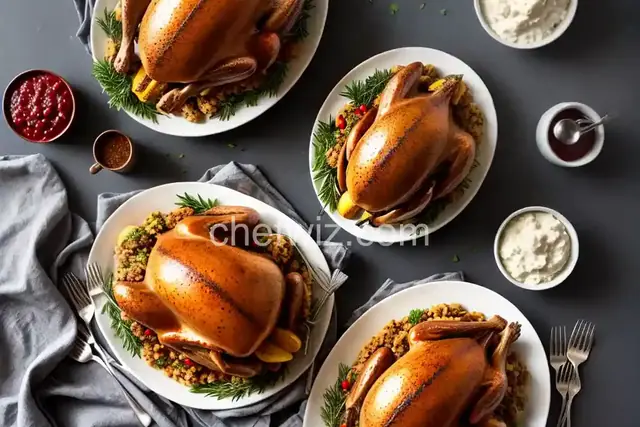
When it comes to the holiday season, few dishes bring as much joy and anticipation as a classic roast turkey. The golden skin, tender meat, and irresistible aroma make it the centerpiece of every festive gathering. But why settle for an ordinary turkey when you can create a masterpiece that will leave your guests begging for seconds?
Roasting a turkey is like conducting an orchestra. You need the right techniques, the perfect timing, and a dash of creativity to achieve the ultimate symphony of flavors. Just as a conductor brings out the best in each musician, you can bring out the best in your turkey by following a few simple steps.
Choosing the right turkey is crucial. Look for a plump bird with firm, pink flesh and smooth, unblemished skin. Free-range, organic turkeys tend to have more flavor, but any quality turkey will do. Remember, the star of the show deserves the best.
Before you start roasting, give your turkey a spa treatment. Rinse it thoroughly, inside and out, with cold water. Pat it dry with paper towels, ensuring the skin is completely dry. This will help the skin crisp up beautifully during cooking.
Seasoning is the secret to a mouthwatering turkey. Create a blend of herbs, spices, and aromatics that will infuse the bird with incredible flavors. Rub it generously all over the turkey, both inside and out, ensuring every nook and cranny is coated with this magical mixture.
As for stuffing, it adds an extra layer of deliciousness. Whether you prefer a classic bread stuffing or a more adventurous wild rice stuffing, be sure to pack it loosely into the turkey's cavity. This will allow the heat to circulate, ensuring even cooking.
Now comes the most critical part: roasting. Preheat your oven to the ideal temperature, usually around 325°F (165°C). Place the turkey on a rack in a roasting pan and let it cook, basting occasionally with pan juices or butter, until the internal temperature reaches a safe 165°F (74°C).
No roast turkey is complete without a luscious gravy. It's the savory elixir that ties the whole meal together. But making the perfect gravy requires finesse and a touch of nostalgia.
As your turkey roasts, it will release flavorful drippings that will become the base of your gravy. Place a roasting pan under the turkey to catch these precious juices. You can also add onions, carrots, and celery to enhance the flavor.
To thicken the gravy, you'll need a roux—a mixture of fat and flour. Melt butter in a saucepan and gradually whisk in flour until you have a smooth paste. Cook the roux over medium heat until it turns golden brown, stirring constantly to avoid any lumps.
Slowly pour the turkey drippings into the saucepan, whisking vigorously to incorporate the roux. Bring the mixture to a simmer, allowing it to thicken and develop rich flavors. Season with salt, pepper, and any additional herbs or spices that tickle your taste buds.
A classic roast turkey is more than just a meal; it's a labor of love that brings people together, creating memories that last a lifetime. With the right techniques and a sense of culinary adventure, you can create a turkey that will be the talk of the town. So, this holiday season, gather your loved ones around the table and savor the magic of a perfectly roasted turkey.
As a general rule, roast your turkey for about 15 minutes per pound. However, it's essential to use a meat thermometer to ensure the internal temperature reaches 165°F (74°C).
It's not recommended to stuff your turkey in advance. Stuffing it right before roasting prevents bacterial growth and ensures a safe and delicious meal.
Basting your turkey with pan juices or butter every 30 minutes will help keep the meat moist and flavorful. You can also cover the turkey with foil during the first half of cooking to retain moisture.
Absolutely! Simmer the giblets (excluding the liver) with onions, carrots, and celery to create a flavorful stock that can be used as a base for your gravy.
Of course! If you prefer not to stuff your turkey, you can still achieve a deliciously moist bird. Simply season the turkey and roast it as directed, without the stuffing.
If you notice the skin getting too dark during roasting, cover it loosely with foil. This will prevent it from burning while allowing the turkey to continue cooking.
Absolutely! The flavorful drippings can be used to make a delicious gravy, or you can use them as a base for soups, stews, or sauces.
Let your turkey rest for at least 20-30 minutes before carving. This allows the juices to redistribute, resulting in a juicier and more tender bird.
AprilCook, recipe developer and the heart of Chefwiz. More about April