Chapati
Rate this recipeBe the first to rate
 By AprilPublished
 Are you craving a warm and flavorful bread to accompany your favorite curry?
 By AprilPublished
 Are you craving a warm and flavorful bread to accompany your favorite curry?
In a bowl, combine the flour and salt. Gradually add water while kneading to create a soft and pliable dough. This process may take around 5-7 minutes.
Transfer the dough to a lightly floured surface and knead it with strong downward pressure for approximately 5 minutes. Cover the dough and let it rest for 30 minutes.
Divide the dough into six equal portions and shape each portion into a ball. Flatten the balls into discs and roll them out on a lightly floured surface until they are 6 inches in diameter.
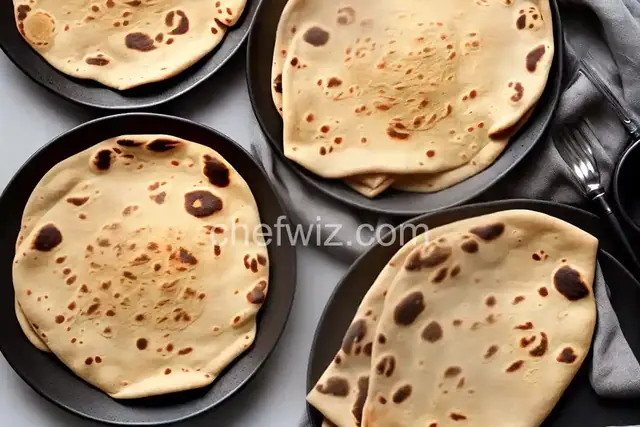
Heat a tawa or frying pan over medium-high heat. Cook one chapati at a time, pressing down on the edges with scrunched-up paper towels or a clean kitchen cloth. The bread should puff up and have brown flecks, indicating it is ready to eat.
Are you craving a warm and flavorful bread to accompany your favorite curry? Look no further than the humble chapati. This staple of Indian cuisine is not only delicious but also incredibly versatile. Whether you want to scoop up a mouthful of spicy curry or wrap it around some savory fillings, chapati is the perfect companion to any meal. In this article, we will explore the history, preparation, and cultural significance of this beloved bread.
The origins of chapati can be traced back thousands of years in the Indian subcontinent. It is believed to have been a staple food for ancient civilizations, and its popularity has endured to this day. The word "chapati" is derived from the Sanskrit word "chapat," which means flat. This name accurately describes the bread's characteristic flat and round shape.
Chapati is made from a simple dough consisting of wheat flour, water, and sometimes salt or oil. The dough is kneaded until it becomes smooth and elastic, and then divided into small portions. These portions are rolled out into thin circles and cooked on a hot griddle or tawa. The bread puffs up slightly when cooked, resulting in a soft and fluffy texture.
Chapati holds a special place in Indian culture and is an integral part of daily meals. It symbolizes nourishment, warmth, and hospitality. In traditional Indian households, making chapati is often seen as a labor of love. It is not uncommon to see family members gathered around the kitchen, rolling out dough and sharing stories while the bread cooks.
One of the reasons for chapati's popularity is its ability to complement a wide range of dishes. Its neutral flavor and soft texture make it the perfect vessel for scooping up curries, dals, and chutneys. It can also be stuffed with various fillings such as spiced potatoes, paneer, or minced meat, creating a delightful and satisfying meal.
Not only is chapati delicious, but it also offers several health benefits. Since it is made from whole wheat flour, it is a good source of fiber, which aids digestion and helps maintain a healthy gut. Chapati is also low in fat and cholesterol, making it a healthier alternative to other bread options.
In conclusion, chapati is more than just a bread; it is a symbol of tradition, love, and versatility in Indian cuisine. Its simple yet delicious flavor, along with its ability to pair well with a variety of dishes, has made it a beloved staple in households across India. So the next time you indulge in a flavorful Indian meal, don't forget to savor every bite of this delightful bread.
A1: Yes, chapati can be made without oil. Simply omit the oil from the dough recipe, and you will still have a delicious and healthy bread.
A2: Whole wheat flour, also known as atta, is the most commonly used flour for making chapati. It provides a nutty flavor and a soft texture.
A3: Yes, chapati can be frozen. After cooking, allow them to cool completely, then place them in airtight bags or containers and store them in the freezer. When ready to use, simply thaw and reheat them on a hot griddle.
A4: Yes, you can prepare chapati dough in advance and store it in the refrigerator for up to 24 hours. This allows the dough to ferment slightly, resulting in a more flavorful bread.
A5: No, chapati is not gluten-free as it is made from wheat flour, which contains gluten. However, there are gluten-free alternatives available for those with dietary restrictions.
A6: To keep chapati soft, store them in a covered container or wrap them in a clean kitchen towel after cooking. This helps retain moisture and prevents them from drying out.
A7: While a tawa is traditionally used to cook chapati, you can also use a non-stick pan or griddle as a substitute.
A8: No, chapati is not a suitable gluten-free alternative as it contains wheat flour. Look for gluten-free bread options if you have a gluten intolerance or allergy.
AprilCook, recipe developer and the heart of Chefwiz. More about April