Cast Iron Roast Beef
Rate this recipeBe the first to rate
 By AprilPublished
 Are you a meat lover? Do you enjoy indulging in the rich, savory flavors of a perfectly cooked roast beef?
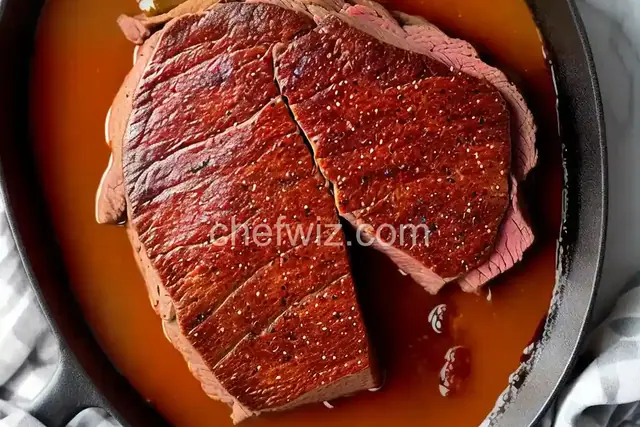 By AprilPublished
 Are you a meat lover? Do you enjoy indulging in the rich, savory flavors of a perfectly cooked roast beef?
Preheat the oven to 400 degrees F.
Place the roast on a plate lined with paper towels and let it reach room temperature for about 1 hour.
Pat the roast dry on all sides using paper towels. Season generously with salt and pepper.
Heat a cast-iron skillet over high heat and add the oil. Wait until the oil shimmers.
Carefully place the roast in the hot oil, being cautious of any popping oil. Sear the roast on all sides until evenly browned and deeply seared, approximately 3 minutes per side.
Turn off the heat and pour 1 cup of beef stock into the skillet. Add the garlic cloves, rosemary, and thyme around the roast.
Transfer the skillet to the preheated oven and roast for 45 to 60 minutes, depending on desired doneness. For a medium roast with a pink center, cook until an instant-read thermometer inserted into the center of the roast reads 130 degrees F, which should take about 50 minutes.
Transfer the roast to a cutting board and discard the garlic cloves and herbs. Cover the roast loosely with aluminum foil to keep it warm while preparing the pan sauce.
Place the skillet back on the stove over medium-high heat. Add the shallots, red wine, and remaining 1/2 cup of beef stock. Simmer, stirring occasionally, until the shallots have softened and the liquid has
Are you a meat lover? Do you enjoy indulging in the rich, savory flavors of a perfectly cooked roast beef? Look no further! In this article, we will take you through the process of cooking a mouthwatering cast iron roast beef. Get ready to tantalize your taste buds and impress your guests with this delectable dish.
Before we dive into the nitty-gritty of cooking a roast beef, let's discuss why you should consider using a cast iron skillet. Cast iron is known for its ability to distribute heat evenly, ensuring that your roast beef cooks to perfection. The skillet retains heat well, allowing for a nice sear on the outside while keeping the inside juicy and tender. It's like having a mini oven on your stovetop!
Choosing the right cut of beef is crucial for a successful roast. Opt for a well-marbled cut, such as a ribeye or a chuck roast, as the fat will melt during cooking, infusing the meat with flavor and keeping it moist. Remember, fat equals flavor!
Before cooking, it's important to bring the meat to room temperature. This allows for even cooking throughout the roast. Pat the meat dry with a paper towel to ensure a nice sear and season it generously with salt and pepper. Don't be afraid to get your hands dirty, massaging the seasoning into the meat for maximum flavor.
Now that your meat is ready, it's time to heat up your cast iron skillet. Place it on medium-high heat and add a splash of oil. Once the skillet is hot, carefully place the roast in the skillet and let it sear for a few minutes on each side. This step locks in the juices and creates a beautiful crust on the outside of the meat.
After searing, it's time to transfer your skillet to the oven. Preheat the oven to the desired temperature and let your roast continue cooking until it reaches your desired level of doneness. Remember to use a meat thermometer to ensure accuracy. Cooking times may vary depending on the size of your roast, so it's always best to refer to a cooking chart for guidance.
Once your roast beef is cooked to perfection, remove it from the oven and let it rest. This step is crucial as it allows the juices to redistribute, resulting in a tender and juicy roast. After resting, carve the beef into thin slices and serve it alongside your favorite sides and sauces. Bon appétit!
While a cast iron skillet is ideal, you can still achieve delicious results with other types of skillets. Just make sure to adjust the cooking time and temperature accordingly.
The recommended internal temperature for a medium-rare roast beef is around 135°F (57°C). However, feel free to adjust the temperature to your desired level of doneness.
It's best to let your roast beef rest for at least 15-20 minutes before carving. This allows the juices to redistribute and ensures a tender and flavorful result.
Absolutely! While this article focuses on roast beef, you can apply the same principles to other types of meat, such as pork or lamb.
Some classic side dishes that pair well with roast beef include mashed potatoes, roasted vegetables, Yorkshire pudding, and a fresh green salad.
While marinating is not necessary for roast beef, you can certainly do so if you want to infuse additional flavors into the meat. Just make sure to pat it dry before searing.
Yes, it is possible to overcook a roast beef. To avoid this, make sure to monitor the internal temperature of the meat and remove it from the oven when it reaches your desired level of doneness.
Absolutely! The pan drippings from the roast beef are perfect for making a flavorful gravy. Simply deglaze the skillet with some broth or wine, add flour to make a roux, and whisk in the drippings for a delicious homemade gravy.
While it is possible to cook a roast beef on a grill, it may require a different cooking method and technique. It's best to refer to a specific recipe or guide for grilling roast beef.
In conclusion, cooking a cast iron roast beef is a delicious and satisfying experience. With the right cut of meat, proper seasoning, and a well-heated cast iron skillet, you can achieve a mouthwatering roast that will impress your family and friends. Don't forget to let the meat rest before carving and serve it with your favorite sides. Happy cooking!
AprilCook, recipe developer and the heart of Chefwiz. More about April