Carbonara Classica
Rate this recipeBe the first to rate
 By AprilPublished
 Have you ever craved a comforting bowl of pasta that is rich, creamy, and oh-so-satisfying?
 By AprilPublished
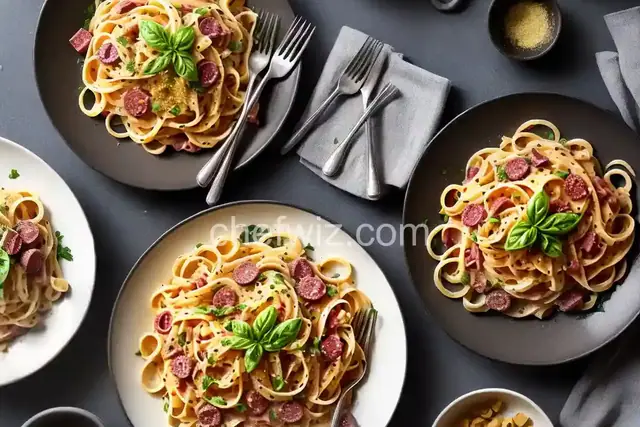
 Have you ever craved a comforting bowl of pasta that is rich, creamy, and oh-so-satisfying?
Cook the pancetta in a saute pan over medium heat until it is tender-crisp. Place it on a plate lined with paper towels and set it aside. Keep the pan with the drippings.
Separate 4 eggs and set aside the yolks. Discard the whites from those 4 eggs. Crack the fifth egg and add it to the yolks.
In a large bowl, whisk together the egg yolks, 2/3 of the cooked pancetta, Parmigiano-Reggiano, black pepper, and cayenne.
Cook the pasta until it is al dente. When the pasta is almost done, add the peas to the cooking water. Strain both the pasta and peas into the pan with the reserved pancetta drippings. Save about 3/4 cup of the pasta water for the sauce.
Add the egg mixture to the pasta and toss it well using tongs for about 1 minute. Gradually add the reserved pasta water to the bowl, about 1/4 cup at a time, stirring and adding more until you reach the desired consistency of the sauce.
Add the parsley and gently mix everything together. Transfer the pasta to a serving dish.
Garnish the dish with the reserved pancetta.
Have you ever craved a comforting bowl of pasta that is rich, creamy, and oh-so-satisfying? Look no further than Carbonara Classica. This traditional Italian dish is a staple in Roman cuisine and is loved all over the world for its simplicity and deliciousness. In this article, we will explore the history of Carbonara Classica, the key ingredients that make it so special, and some tips and tricks to create the perfect Carbonara Classica at home.
Carbonara Classica has a fascinating history that dates back to the mid-20th century in Italy. Legend has it that the dish was created by Italian coal miners who used leftover ingredients from their lunchboxes to create a hearty and satisfying meal. The dish was named "carbonara" after the Italian word for coal, "carbone."
Over the years, Carbonara Classica has evolved and gained popularity, becoming a favorite among Italians and international food enthusiasts alike. Its creamy texture, smoky flavors, and simple preparation method have made it a classic dish that stands the test of time.
Carbonara Classica is known for its simplicity and use of only a few key ingredients. The star of the show is the pasta, typically spaghetti or rigatoni, cooked al dente to perfection. The sauce is made from a combination of eggs, grated Pecorino Romano cheese, and crispy guanciale or pancetta. These ingredients come together to create a creamy and flavorful sauce that coats the pasta beautifully.
Another important element of Carbonara Classica is black pepper. The freshly ground black pepper adds a subtle kick and enhances the flavors of the dish. It's important to use high-quality ingredients to achieve the best results. The combination of these ingredients creates a dish that is rich, savory, and utterly delicious.
To create the perfect Carbonara Classica, there are a few tips and tricks to keep in mind:
Choose the best quality pasta, eggs, cheese, and cured meat available to ensure the best flavor and texture.
Follow the cooking instructions on the pasta package and cook it until it is firm to the bite. This will prevent the pasta from becoming mushy when combined with the sauce.
Cook the guanciale or pancetta until it is crispy and golden brown. This will add a smoky flavor and a delightful crunch to the dish.
Before adding the beaten eggs to the pasta, temper them by slowly adding hot pasta water. This will ensure a creamy and silky sauce without the risk of scrambled eggs.
Once the pasta is cooked and drained, remove it from the heat before adding the sauce. This will help prevent the eggs from overcooking and turning into a scrambled mess.
By following these tips and tricks, you'll be able to create a Carbonara Classica that is restaurant-worthy and will impress your family and friends.
Carbonara Classica is a timeless dish that captures the essence of Italian comfort food. With its rich and creamy sauce, smoky flavors, and simple preparation method, it's no wonder this dish has become a favorite around the world. Whether you're a seasoned chef or a beginner in the kitchen, Carbonara Classica is a dish that anyone can master. So grab your apron, gather the ingredients, and get ready to indulge in a bowl of pure pasta perfection!
Yes, Carbonara Classica is a traditional Italian dish that originated in Rome.
While guanciale or pancetta is traditionally used in Carbonara Classica, you can substitute with bacon if you can't find them.
Pecorino Romano cheese is the traditional choice for Carbonara Classica, but you can also use Parmigiano-Reggiano or a combination of both.
Traditional Carbonara Classica does not include vegetables, but you can experiment and add ingredients like peas or mushrooms if you prefer.
Spaghetti and rigatoni are the most commonly used pasta shapes for Carbonara Classica, but you can use any pasta shape you like.
Eggs are an essential part of the Carbonara Classica sauce. However, if you have dietary restrictions or preferences, you can try making a vegan version using alternative ingredients.
Carbonara Classica is best enjoyed fresh. Reheating can cause the eggs to overcook and the sauce to become clumpy. It's recommended to consume it immediately after cooking.
It's not recommended to freeze Carbonara Classica as the sauce may separate and the texture may change when thawed. It's best to enjoy it fresh.
AprilCook, recipe developer and the heart of Chefwiz. More about April