Cape Malay Pickled Fish
Rate this recipeBe the first to rate
 By AprilPublished
Have you ever tried Cape Malay pickled fish? If not, you're in for a treat!
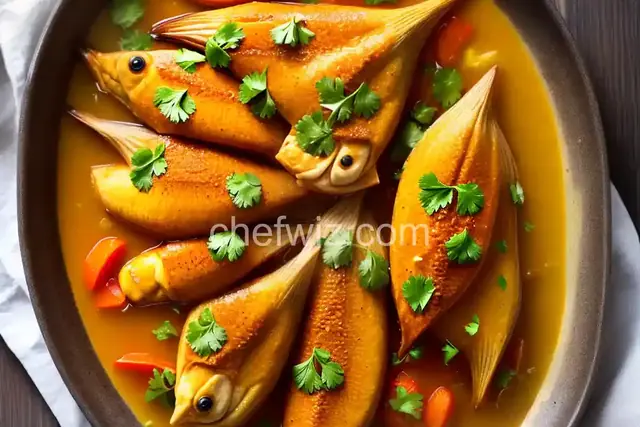 By AprilPublished
Have you ever tried Cape Malay pickled fish? If not, you're in for a treat!
Heat oil in a large skillet on medium-high heat.
Season the fish with salt and fry it in the hot skillet until it turns brown and easily flakes with a fork. This should take around 5 minutes per side.
Transfer the fish to a plate.
Add onions and garlic to the skillet and cook them on medium heat until they become translucent, which should take about 5 minutes.
Add chile pepper, bay leaves, peppercorns, and allspice berries to the skillet.
Pour in vinegar and water and bring the mixture to a boil.
Stir in brown sugar until it dissolves.
Season the mixture with curry powder, cumin, coriander, and turmeric.
Taste the mixture and add more brown sugar if desired.
Arrange layers of fish and pickling mixture in a serving dish.
Pour the pickling liquid over the top layer, ensuring that it covers the fish.
Allow the dish to cool to room temperature, which should take around 30 minutes.
Cover the dish and refrigerate it for at least 24 hours before serving.
Have you ever tried Cape Malay pickled fish? If not, you're in for a treat! This traditional South African dish is a burst of flavors that will tantalize your taste buds. The combination of sweet and sour, along with aromatic spices, creates a unique and unforgettable culinary experience.
Cape Malay pickled fish is deeply rooted in the history of South Africa. It dates back to the 17th century when Dutch settlers arrived in Cape Town. The Malay community, brought to the Cape as slaves, introduced their culinary traditions, including pickled fish. Over the years, the dish has become a beloved staple in Cape Malay cuisine and is often enjoyed during religious and festive occasions.
What makes Cape Malay pickled fish so special? It's all in the pickling process. The fish, typically firm white fish such as yellowtail or kingklip, is marinated in a mixture of vinegar, sugar, and aromatic spices like curry powder, turmeric, and coriander seeds. The fish is then left to soak in the pickling liquid for a few days, allowing the flavors to infuse and the fish to become tender and succulent.
When you take a bite of Cape Malay pickled fish, you'll experience a symphony of flavors dancing on your palate. The tanginess of the vinegar and the sweetness of the sugar create a perfect balance. The spices add depth and complexity, while the tender fish melts in your mouth. It's a harmonious blend of contrasting tastes that will leave you craving for more.
Cape Malay pickled fish is incredibly versatile. It can be enjoyed in various ways, making it suitable for any occasion. Serve it as an appetizer with freshly baked bread or crackers, or as a main course accompanied by fragrant rice and a crisp salad. You can even use it as a filling for sandwiches or wraps, adding a burst of flavor to your lunchtime routine.
Cape Malay pickled fish not only delights the taste buds but also carries a sense of tradition and nostalgia. For many South Africans, it is a dish that evokes memories of family gatherings, festive celebrations, and warm conversations around the dinner table. By preparing and savoring this dish, you become part of a rich culinary heritage and create your own cherished memories.
Cape Malay pickled fish is not just a dish; it's a culinary journey through history and tradition. The unique combination of flavors, the artful pickling process, and the versatility of the dish make it a true gem of South African cuisine. So, why not embark on this flavorful adventure and savor the delights of Cape Malay pickled fish?
While firm white fish like yellowtail or kingklip are traditionally used, you can experiment with other types of fish as well.
The fish should be left to marinate in the pickling liquid for at least 48 hours to allow the flavors to develop fully.
Absolutely! Feel free to adjust the amount of curry powder or chili flakes according to your taste preferences.
If stored in an airtight container in the refrigerator, the pickled fish can last for up to a week.
No, Cape Malay pickled fish is a fish-based dish and not suitable for vegetarians.
It is not recommended to freeze pickled fish as it can affect the texture and flavor of the dish.
Bobotie, samoosas, and koeksisters are some other popular traditional Cape Malay dishes.
Absolutely! Feel free to experiment with different spices or add a touch of your favorite herb to personalize the flavors.
AprilCook, recipe developer and the heart of Chefwiz. More about April