Cacio e Pepe
Rate this recipeBe the first to rate
 By AprilPublished
 When it comes to Italian cuisine, nothing quite captures the essence of simplicity and flavor like Cacio e Pepe.
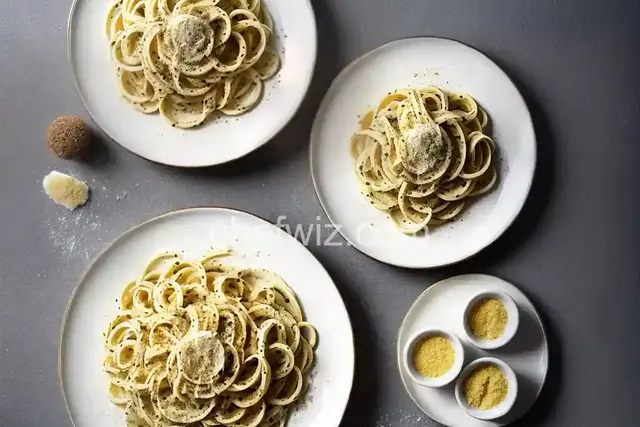 By AprilPublished
 When it comes to Italian cuisine, nothing quite captures the essence of simplicity and flavor like Cacio e Pepe.
In a 5-qt. pot, bring 3 quarts of water to a boil.
Season the boiling water with salt.
Add the pasta to the pot and cook, stirring occasionally, until it is about 2 minutes away from being tender.
Drain the pasta, but make sure to reserve ¾ cup of the cooking water.
In a Dutch oven or another large pot or skillet, melt 2 tablespoons of butter over medium heat.
Add the pepper to the skillet and cook for about 1 minute, swirling the pan, until it is toasted.
Pour ½ cup of the reserved pasta water into the skillet and bring it to a simmer.
Add the cooked pasta and the remaining butter to the skillet.
Reduce the heat to low and add Grana Padano cheese, stirring and tossing with tongs until it is melted.
Remove the skillet from heat and add Pecorino cheese, stirring and tossing until the cheese melts, the sauce coats the pasta, and the pasta is al dente.
If the sauce seems dry, you can add more pasta water.
Transfer the pasta to warm bowls and serve.
When it comes to Italian cuisine, nothing quite captures the essence of simplicity and flavor like Cacio e Pepe. This classic Roman pasta dish, which translates to "cheese and pepper," is a testament to how a handful of ingredients can come together to create a truly memorable culinary experience. In this article, we will explore the origins of Cacio e Pepe, its key ingredients, and the secrets to achieving the perfect balance of flavors. Let's dive in!
Cacio e Pepe has a long and storied history that dates back to ancient Rome. Legend has it that Roman shepherds would make this dish using simple ingredients they had on hand: pasta, Pecorino Romano cheese, and black pepper. It was a dish born out of necessity, but one that has stood the test of time.
Today, Cacio e Pepe is celebrated not only in Rome but around the world. Its popularity lies in its ability to elevate humble ingredients into something truly extraordinary. It's a dish that embodies the heart and soul of Italian cuisine: simple, honest, and full of flavor.
At the heart of Cacio e Pepe are three key ingredients: pasta, Pecorino Romano cheese, and black pepper. The choice of pasta is crucial, with long, thin strands like spaghetti or tonnarelli being the traditional options. The pasta should be cooked al dente, allowing it to retain a bit of bite.
Pecorino Romano, a hard and salty sheep's milk cheese, is the star of the show. Its sharp, tangy flavor adds depth and richness to the dish. When combined with freshly ground black pepper, the cheese melts into a creamy sauce that coats the pasta strands, creating a harmonious blend of flavors.
While the ingredients of Cacio e Pepe are simple, mastering the technique can be a bit more challenging. The key lies in achieving the perfect balance of flavors and textures. Here are a few tips to help you on your way:
Since Cacio e Pepe relies on just a few ingredients, it's important to use the best quality you can find. Opt for freshly grated Pecorino Romano cheese and invest in a good-quality black pepper grinder. These small details can make a big difference in the final result.
When cooking the pasta, be sure to reserve some of the starchy pasta water before draining. This water will later be used to create a silky sauce that clings to the pasta. It's a trick that Italian nonnas have been using for generations!
When adding the cheese to the pasta, it's important to do so gradually. This allows the cheese to melt evenly and prevents clumping. Toss the pasta continuously as you add the cheese, ensuring that each strand is coated in the creamy sauce.
Black pepper is a key component of Cacio e Pepe, but it's important not to overpower the dish. Start with a small amount and gradually adjust to taste. The pepper should add a gentle warmth and aromatic flavor without overwhelming the other ingredients.
While the traditional Cacio e Pepe recipe is a timeless favorite, there are also countless variations to explore. Some chefs add a touch of butter for extra creaminess, while others experiment with different types of cheese or pasta shapes. Whether you prefer a classic rendition or a modern twist, Cacio e Pepe offers endless possibilities for culinary creativity.
Cacio e Pepe is more than just a pasta dish. It's a celebration of simplicity, a testament to the power of a few well-chosen ingredients. With its rich history and bold flavors, this Roman classic continues to captivate taste buds around the world. So why not channel your inner Roman chef and give Cacio e Pepe a try? You'll be amazed at how such a simple dish can leave a lasting impression.
A1: While Pecorino Romano is the traditional choice, you can experiment with other hard, salty cheeses like Parmigiano-Reggiano or Grana Padano.
A2: If your sauce becomes too thick, simply add a splash of reserved pasta water and toss the pasta to loosen it up.
A3: While purists may argue against it, feel free to add your own twist to the recipe. Some popular additions include crispy pancetta or sautéed mushrooms.
A4: While spaghetti or tonnarelli are the traditional choices, you can use any long, thin pasta that you prefer.
A5: Yes, Cacio e Pepe is a vegetarian dish as long as you use vegetarian-friendly cheese.
A6: Cacio e Pepe is best enjoyed immediately after cooking, as the cheese sauce tends to thicken upon standing.
A7: It's best to enjoy Cacio e Pepe fresh, as reheating can cause the sauce to become clumpy. However, if you have leftovers, you can reheat them gently in a pan with a splash of pasta water.
A8: Cacio e Pepe is typically made with traditional wheat-based pasta, but you can easily adapt the recipe using gluten-free pasta options.
AprilCook, recipe developer and the heart of Chefwiz. More about April