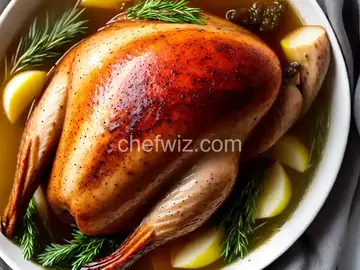
Buttermilk-Brined Turkey
Rate this recipeBe the first to rate
 By AprilPublished
 Are you tired of serving dry and bland turkey for Thanksgiving or any other special occasion?
 By AprilPublished
 Are you tired of serving dry and bland turkey for Thanksgiving or any other special occasion?
In a large stockpot, combine water, salt, parsley, coriander, peppercorns, mustard seeds, garlic powder, and bay leaves. Bring to a boil and let it boil for about 2 minutes until the salt has dissolved. Allow it to cool for 15 minutes.
Stir in buttermilk into the cooled mixture.
Rinse the turkey in cold water, then place it in a brining bag.
Pour the buttermilk brine over the turkey in the brining bag. Make sure the turkey is fully covered.
Refrigerate the turkey in the brine for 24 hours, turning it occasionally.
After 24 hours, discard the brine and rinse the turkey thoroughly with cold water.
Use paper towels to pat the turkey dry, then place it breast side up in a roasting pan.
Rub butter over the entire skin of the turkey and let it sit for 1 hour.
Preheat the oven to 350 degrees F (175 degrees C).
Cook the turkey in the preheated oven for about 3 hours, or until an instant-read thermometer inserted into the thickest part of the thigh, near the bone, reads 165 degrees F (74 degrees C).
Note: The nutrition data for this recipe includes the full amount of brine ingredients. The actual amount of brine consumed may vary.
Are you tired of serving dry and bland turkey for Thanksgiving or any other special occasion? Look no further than the buttermilk brine! This simple yet effective technique will transform your turkey into a succulent and flavorful masterpiece that will have your guests coming back for seconds and thirds. In this article, we will delve into the wonders of buttermilk brining, exploring its benefits, the brining process, and some frequently asked questions. So, let's dive in and discover the secret to a juicy and delicious turkey!
Traditional brining involves soaking the turkey in a solution of salt and water to enhance its flavor and moisture. While this method can be effective, it often leaves the meat with a salty taste. Buttermilk brining, on the other hand, not only infuses the turkey with moisture but also imparts a subtle tangy and creamy flavor. The acidity of buttermilk breaks down the proteins in the meat, resulting in a tender and juicy texture.
Brining a turkey with buttermilk is a straightforward process that requires minimal effort. Start by combining buttermilk, salt, sugar, and your choice of herbs and spices in a large container or brining bag. Place the turkey in the brine, ensuring it is fully submerged. Refrigerate the turkey and let it marinate for at least 24 hours, allowing the buttermilk to work its magic.
After the brining period, remove the turkey from the brine and rinse it thoroughly to remove any excess salt. Pat the turkey dry with paper towels to ensure a crispy skin when cooked. Now, your turkey is ready to be roasted, grilled, or fried to perfection!
Buttermilk brining is a game-changer when it comes to cooking turkey. Not only does it ensure a moist and tender bird, but it also imparts a delightful tangy taste that will leave your guests craving for more. So, the next time you're planning a special meal, give buttermilk brined turkey a try and experience the difference for yourself. Happy cooking!
A1: The acid in buttermilk helps break down the proteins in the turkey, resulting in a tender and moist texture.
A2: Yes, low-fat buttermilk works well for brining. However, full-fat buttermilk will provide a richer flavor and texture.
A3: It is recommended to brine the turkey for at least 24 hours. You can brine it for up to 48 hours for maximum flavor and tenderness.
A4: It is not recommended to reuse the brine as it may contain bacteria from the raw turkey. Discard the brine after use.
A5: No, the turkey must be completely thawed before brining to ensure proper absorption of the buttermilk and flavors.
A6: Absolutely! Buttermilk brine works wonders for chicken, pork, and even fish, adding moisture and flavor to any protein.
A7: Yes, if you are using a pre-brined turkey, reduce the amount of salt in the buttermilk brine or skip the salt altogether to avoid over-seasoning.
A8: Flavored buttermilk, such as garlic or herb-infused, can add an extra layer of complexity to the turkey's flavor. Feel free to experiment and see what suits your taste buds!
AprilCook, recipe developer and the heart of Chefwiz. More about April