Black Noodles
Rate this recipeBe the first to rate
 By AprilPublished
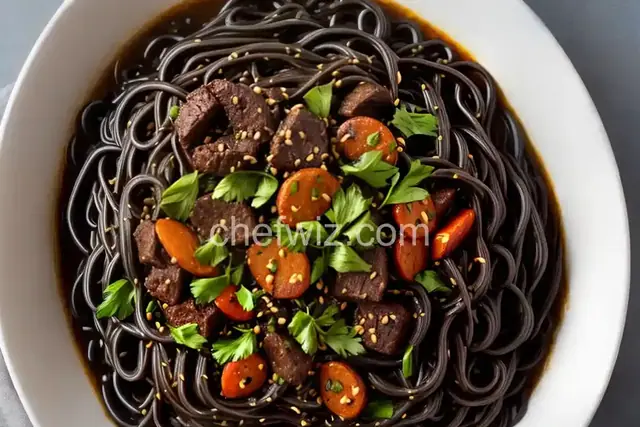
 Have you ever come across black noodles? These intriguing strands of darkness not only catch your eye but also tickle your taste buds.
 By AprilPublished
 Have you ever come across black noodles? These intriguing strands of darkness not only catch your eye but also tickle your taste buds.
In a small saucepan, combine garlic and ½ cup of oil. Cook over medium-low heat until bubbles form around the garlic.
Continue cooking until the garlic turns golden brown and the oil becomes fragrant. This should take around 10-15 minutes.
Remove the saucepan from heat and let the garlic oil cool. Discard the garlic and transfer the oil to a large bowl. Set it aside.
In a medium skillet, heat the remaining ½ cup of oil over medium-high heat.
Add the bread to the skillet and cook, tossing it constantly, until it turns golden brown and crisp. This should take about 5 minutes.
Transfer the croutons to paper towels and sprinkle them with salt.
Cook the noodles in a large pot of boiling salted water, following the instructions on the package. Use a fork or chopsticks to separate the strands as they cook.
Once cooked, drain the noodles and rinse them immediately with cold water. Make sure to drain them well.
Add the drained noodles to the bowl with the garlic oil and toss them to coat.
Add lime juice and soy sauce to the noodles, and toss them again to coat. Season with salt and ground chile (you may not need to use all of it).
Add celery, lettuce, and bean sprouts to the bowl and toss everything together.
Top the noodles with scallions, cil
Have you ever come across black noodles? These intriguing strands of darkness not only catch your eye but also tickle your taste buds. Black noodles are becoming increasingly popular, and for good reason. In this article, we will dive into the world of black noodles, exploring their origin, unique characteristics, and why they are worth a try. So, get ready to embark on a culinary adventure like no other!
What makes black noodles black? It's not magic, but rather an intriguing ingredient called squid ink. Just like a painter's canvas, black noodles derive their color from this dark, flavorful ink. Squid ink is a natural food coloring obtained from the ink sac of squid, giving the noodles a striking ebony hue.
But don't let the color fool you; black noodles are not just a visual feast. They boast a unique taste profile that sets them apart from their traditional counterparts. The squid ink infuses the noodles with a subtle briny flavor, reminiscent of the ocean. It adds depth and complexity to every bite, making for an extraordinary gastronomic experience.
Black noodles are incredibly versatile, making them a great addition to any culinary repertoire. Whether you prefer Asian-inspired dishes or are a fan of Italian cuisine, black noodles can be incorporated into a wide range of recipes.
Imagine a vibrant seafood stir-fry, where the black noodles intertwine with plump shrimp, tender calamari, and crisp vegetables. The contrast of colors and flavors creates a visually stunning and delicious dish that will leave you craving for more.
If you're in the mood for Italian fare, black noodles can be transformed into a delectable seafood pasta. Toss them with fresh clams, mussels, and a garlicky white wine sauce for a taste of the Mediterranean. The intense black color of the noodles will make the dish a talking point at any dinner party.
As black noodles gain popularity, they are becoming more readily available in specialty grocery stores and online marketplaces. Look for them in the pasta aisle or the international foods section. You can also explore local Asian markets or seafood markets, where you are likely to find fresh or dried versions of black noodles.
Alternatively, if you're feeling adventurous, you can try making your own black noodles at home. There are numerous recipes available online that guide you through the process of incorporating squid ink into your homemade pasta dough.
Black noodles not only offer a unique culinary experience but also come with a range of health benefits. Squid ink is rich in antioxidants, which help fight against free radicals and reduce oxidative stress in the body. It also contains essential minerals like iron and zinc, which play a vital role in overall health.
Moreover, black noodles are often made from high-quality durum wheat or rice flour, which provides a good source of carbohydrates and dietary fiber. This combination helps maintain energy levels and supports a healthy digestive system.
Black noodles are a culinary delight that captivates both the eyes and the taste buds. Their striking appearance and unique flavor make them a standout addition to various dishes. Whether you choose to enjoy them in a seafood stir-fry or a classic pasta dish, black noodles are sure to leave a lasting impression on your palate.
Yes, black noodles made from squid ink are safe to consume. Squid ink is a natural ingredient widely used in culinary traditions around the world.
While black noodles may temporarily darken your teeth, the staining is usually minimal and can be easily removed with regular brushing.
Black noodles have a subtle briny flavor due to the squid ink. However, the taste is not overpowering and adds a unique twist to the dish.
Yes, you can freeze black noodles. Simply cook them al dente, rinse with cold water to stop the cooking process, and freeze in an airtight container for up to three months.
Black noodles made with squid ink are not vegetarian-friendly. However, there are alternative versions available that use natural food coloring to achieve a similar appearance.
Cooking black noodles is similar to cooking regular pasta. Boil them in salted water until al dente, then drain and rinse with cold water to prevent sticking.
Absolutely! Black noodles can be a stunning addition to soups and broths, adding an extra visual and flavor dimension to your favorite bowl of comfort.
Black noodles made from durum wheat are not gluten-free. However, there are gluten-free alternatives available that use rice flour or other gluten-free grains.
AprilCook, recipe developer and the heart of Chefwiz. More about April