Bison Brisket with Roasted Potatoes & Gravy
Rate this recipeBe the first to rate
 By AprilPublished
 Are you tired of the same old beef brisket? Looking for a new and exciting twist on a classic dish?
 By AprilPublished
 Are you tired of the same old beef brisket? Looking for a new and exciting twist on a classic dish?
Season both sides of the brisket with Steak & Burger Seasoning.
Place the seasoned brisket in a large roasting pan.
Add water, broth, and potatoes to the roasting pan.
Roast the brisket at 250�F for 6 hours.
Remove the brisket from the roasting pan and let it rest for 10-15 minutes.
Pour the juices from the roasting pan into a skillet.
Turn the skillet to medium-low heat.
Add 1/4 cup of flour, salt, and pepper to taste to the skillet.
Continuously mix the ingredients in the skillet until the gravy thickens.
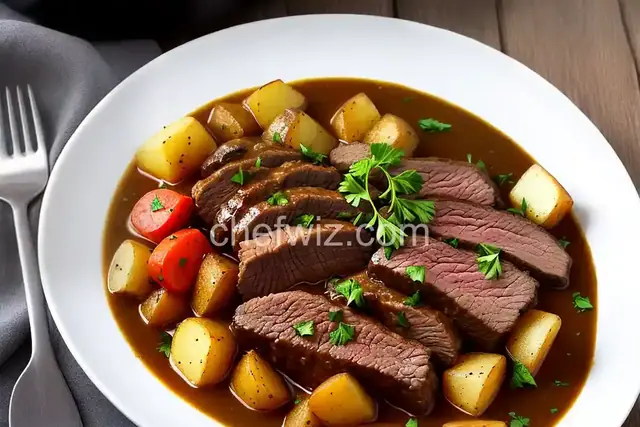
Serve the thickened gravy over the brisket and potatoes.
Are you tired of the same old beef brisket? Looking for a new and exciting twist on a classic dish? Look no further than bison brisket! In this article, we'll explore the flavorful world of bison brisket, and how to prepare it with roasted potatoes and gravy for a truly mouthwatering meal.
Bison meat is not only delicious, but it's also a healthier alternative to beef. It's leaner and lower in fat, making it a great choice for those who are conscious of their dietary intake. Plus, bison meat has a rich, bold flavor that adds a unique touch to any dish.
When it comes to brisket, bison offers a tender and juicy option that will have your taste buds dancing with delight. The meat is full of flavor and marbled with just the right amount of fat to ensure a melt-in-your-mouth experience.
Preparing bison brisket is similar to preparing beef brisket. The key is to season it well and cook it low and slow to ensure a tender and flavorful result. You can use your favorite dry rub or marinade to infuse the meat with delicious flavors. Then, simply place the brisket in a roasting pan and cook it in the oven at a low temperature for several hours until it's fork-tender.
No meal is complete without a side of roasted potatoes. To complement the bison brisket, we'll roast the potatoes to perfection. Start by cutting the potatoes into bite-sized pieces and tossing them with olive oil, salt, and your favorite herbs and spices. Spread them out on a baking sheet and roast them in the oven until they're golden brown and crispy on the outside, and soft and fluffy on the inside.
No bison brisket meal is complete without a rich and flavorful gravy. To make the gravy, simply deglaze the roasting pan with some beef or vegetable broth, scraping up all those delicious browned bits from the bottom. Add a little flour or cornstarch to thicken the gravy, and let it simmer until it reaches the desired consistency. Season with salt, pepper, and any additional herbs or spices to taste.
Bison brisket with roasted potatoes and gravy is a delicious twist on a classic dish. The lean and flavorful bison meat pairs perfectly with crispy roasted potatoes and a rich, savory gravy. It's a meal that will impress your family and friends and leave them wanting more.
You can find bison meat at specialty meat markets, some grocery stores, or online from reputable sources.
Yes, you can definitely use beef brisket if you prefer. The cooking method and seasonings will be the same.
Bison brisket should be cooked low and slow at a temperature of around 225°F for 6-8 hours, or until it's fork-tender.
Yes, you can roast the potatoes ahead of time and reheat them in the oven before serving. Just be sure to store them in an airtight container in the refrigerator.
Bison brisket pairs well with a variety of side dishes, such as roasted vegetables, coleslaw, or a fresh green salad.
Yes, you can freeze any leftover bison brisket for future meals. Just be sure to wrap it tightly in plastic wrap or aluminum foil before placing it in the freezer.
Absolutely! The leftover bison brisket makes delicious sandwiches. Simply slice it thinly and serve it on your favorite bread or bun with your choice of toppings.
Yes, the leftover gravy can be used to enhance the flavor of other dishes, such as mashed potatoes, roasted vegetables, or even as a sauce for pasta.
AprilCook, recipe developer and the heart of Chefwiz. More about April