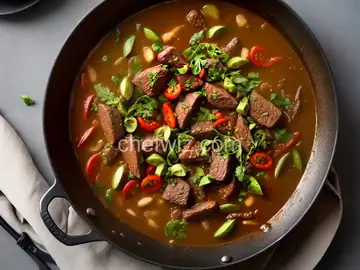
Bibimbap (Korean Rice With Mixed Vegetables)
Rate this recipeBe the first to rate
 By AprilPublished
 Have you ever tried the delightful Korean dish called Bibimbap?
 By AprilPublished
 Have you ever tried the delightful Korean dish called Bibimbap?
In a bowl, combine cucumber pieces and gochujang paste. Set aside.
Bring about 2 cups of water to a boil in a large nonstick skillet. Add spinach and cook for 2 to 3 minutes until it turns bright green and wilts.
Drain the spinach and squeeze out as much moisture as possible. Place the spinach in a separate bowl and stir in soy sauce.
In a large nonstick skillet, heat 1 teaspoon of olive oil. Cook and stir the carrots until they soften, approximately 3 minutes.
Add garlic to the skillet and cook until fragrant, about 1 minute. Stir in the cucumber mixture and sprinkle with red pepper flakes. Transfer the carrot mixture to a bowl.
Brown the beef in a clean nonstick skillet over medium heat for about 5 minutes per side. Set aside.
Heat the remaining 1 teaspoon of olive oil in another nonstick skillet over medium-low heat. Fry the eggs on one side until the yolks are runny but the whites are firm, for about 2 to 4 minutes.
Divide the cooked rice into 4 large serving bowls. Top each bowl with the spinach mixture, a few pieces of beef, and the cucumber mixture. Place 1 fried egg on top of each serving.
Drizzle each bowl with 1 teaspoon of sesame oil, sprinkle with sesame seeds, and add a small amount of gochujang
Have you ever tried the delightful Korean dish called Bibimbap? It's a vibrant and flavorful rice bowl that combines various vegetables, meat, and a fried egg on top. This iconic Korean dish is not only delicious but also packed with nutrients. Let's dive into the world of Bibimbap and explore what makes it so special.
One of the most striking features of Bibimbap is its colorful presentation. The dish is like a painter's palette, with an array of vegetables arranged beautifully on a bed of rice. The vibrant colors not only make it visually appealing but also indicate a variety of nutrients. From the earthy greens of spinach to the vibrant orange of carrots and the fiery red of chili peppers, Bibimbap is a feast for your eyes.
But it's not just about the colors; Bibimbap is also a symphony of flavors. The combination of different vegetables, along with the savory meat and the tangy gochujang sauce, creates a burst of taste in every bite. It's a delightful mix of textures, from the crispness of the vegetables to the tender meat and the slightly runny yolk of the fried egg. Each element brings its own unique flavor and texture, resulting in a harmonious blend that satisfies both your taste buds and your stomach.
Bibimbap is not just a visually appealing and flavorful dish; it's also a healthy and nutritious one. The abundance of vegetables provides a wide range of vitamins, minerals, and fiber. The variety of vegetables ensures that you get a good mix of nutrients, making Bibimbap a well-rounded meal.
Furthermore, the lean meat in Bibimbap adds a good source of protein to the dish. Protein is essential for muscle growth and repair, and it also helps keep you feeling full and satisfied. The combination of protein, fiber, and complex carbohydrates from the rice makes Bibimbap a balanced and filling meal.
Now that you know how wonderful Bibimbap is, you must be wondering how to enjoy it yourself. The good news is that you don't have to travel all the way to Korea to experience this delightful dish. Many Korean restaurants around the world serve Bibimbap, and you can even make it at home.
To make Bibimbap at home, you'll need some basic ingredients like rice, vegetables, meat, and gochujang sauce. Feel free to get creative with the vegetables you use. Some popular choices include carrots, spinach, bean sprouts, mushrooms, and zucchini. You can also add some protein like beef, chicken, or tofu.
Start by cooking the rice and preparing the vegetables. Saute them separately, so each retains its unique flavor and texture. Once everything is ready, assemble the Bibimbap bowl by placing the rice at the bottom and arranging the vegetables and meat on top. Finally, add a fried egg and drizzle some gochujang sauce over it.
Bibimbap is a dish that truly delights all of your senses. From its vibrant colors to its burst of flavors, every bite is a journey of taste and texture. Not only is Bibimbap a visually appealing and delicious dish, but it's also a healthy and nutritious meal. So why not give it a try and experience the wonders of Bibimbap for yourself?
The level of spiciness in Bibimbap can vary depending on the amount of gochujang sauce you use. You can adjust the spiciness to your taste.
Absolutely! You can omit the meat and add more vegetables or use tofu as a protein alternative.
Short-grain rice, such as Korean rice or sushi rice, works best for Bibimbap as it has a sticky texture that holds all the ingredients together.
Gochujang sauce is a key ingredient in Bibimbap, but if you can't find it, you can try a mixture of soy sauce, sesame oil, and chili flakes as a substitute.
Absolutely! Bibimbap is a versatile dish, and you can use any vegetables you like or have on hand.
Yes, Bibimbap is a complete meal as it contains a good balance of protein, carbohydrates, and vegetables.
While it's best to enjoy Bibimbap fresh, you can prepare the individual components in advance and assemble them just before serving.
Yes, you can omit the fried egg if you prefer. The dish will still be delicious without it.
AprilCook, recipe developer and the heart of Chefwiz. More about April