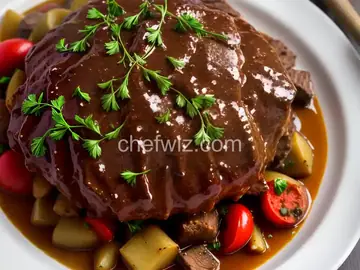
Best Prime Rib Roast
Rate this recipeBe the first to rate
 By AprilPublished
 Are you ready to impress your friends and family with a mouthwatering prime rib roast?
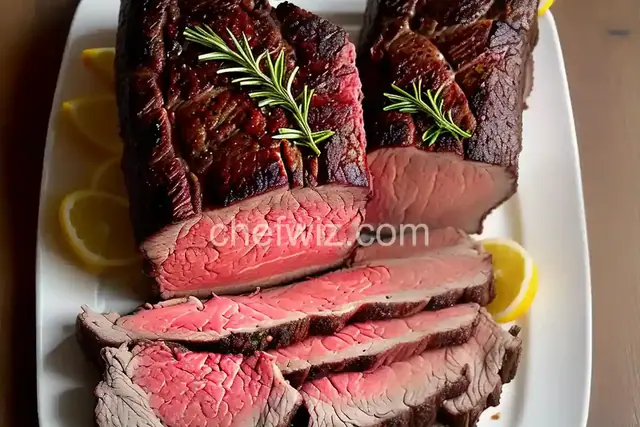 By AprilPublished
 Are you ready to impress your friends and family with a mouthwatering prime rib roast?
Combine ginger, marmalade, garlic, soy sauce, brown sugar, hot sauce, and mustard. Mix well and add beer. Prick holes all over the roast with a 2-pronged fork. Pour the marinade over the roast, ensuring it is fully covered. Cover the roast and refrigerate for at least 2 hours, basting it at least twice.
Preheat the oven to 400 degrees F (200 degrees C).
Place the roast on a rack in a roasting pan. Pour about 1 cup of the marinade into the pan and discard the remaining marinade. Drizzle olive oil over the roast and season with freshly ground black pepper. Insert a roasting thermometer into the middle of the roast, making sure it doesn't touch any bone. Cover the roasting pan tightly with aluminum foil, sealing the edges.
Cook the roast in the preheated oven for 1 hour. After the first hour, remove the aluminum foil. Baste the roast, reduce the heat to 325 degrees F (165 degrees C), and continue roasting for another hour. The thermometer should read at least 140 degrees F (60 degrees C) for medium-rare or 170 degrees F (76 degrees C) for well done.
Remove the roasting pan from the oven, cover the roast with aluminum foil, and let it rest for about 30 minutes before slicing.
Are you ready to impress your friends and family with a mouthwatering prime rib roast? Look no further! In this article, we will guide you through the process of preparing the best prime rib roast that will have everyone coming back for seconds.
There is something undeniably special about a prime rib roast. Its tender, juicy meat and rich, beefy flavor make it a favorite choice for special occasions and holiday feasts. Just the thought of sinking your teeth into a perfectly cooked slice of prime rib can make your mouth water.
But what sets a prime rib roast apart from other cuts of beef? It all comes down to the marbling. Prime rib is cut from the rib section of the cow, where the meat is generously marbled with fat. This marbling is what gives the roast its incredible tenderness and flavor.
When it comes to selecting the perfect prime rib roast, there are a few factors to consider. First, you want to make sure you are getting a high-quality piece of meat. Look for a roast that is well-marbled with fat, as this will ensure a juicy and flavorful result.
Additionally, pay attention to the grade of the beef. Prime grade beef is the highest quality and will provide the best flavor and tenderness. However, if prime grade is not available, choose a roast that is labeled as "choice" or "select" for a delicious result.
Now that you have your prime rib roast, it's time to unlock the secret to a perfect result. The key is to cook the roast low and slow. This allows the meat to cook evenly and develop a beautiful crust on the outside while remaining juicy and tender on the inside.
Start by preheating your oven to a high temperature, around 450°F (230°C). This initial blast of heat will help to sear the outside of the roast and lock in the juices. Once the roast is seared, reduce the oven temperature to a lower heat, around 325°F (163°C), and continue cooking until it reaches your desired level of doneness.
Remember, the roast will continue to cook slightly after it is removed from the oven, so it's best to take it out when it is a few degrees below your desired temperature.
Once the prime rib roast has reached the perfect temperature, it's important to let it rest before carving. This allows the juices to redistribute throughout the meat, resulting in a more flavorful and tender roast.
Let the roast rest for about 15-20 minutes, tented loosely with foil to keep it warm. During this time, the internal temperature will continue to rise slightly, and the meat will be easier to carve.
When it's time to carve, use a sharp carving knife to slice the roast against the grain into thick, juicy slices. Serve it up with your favorite sides, such as creamy mashed potatoes and roasted vegetables, for a truly unforgettable meal.
The cooking time will depend on the size of your roast and the desired level of doneness. As a general rule, you can estimate about 15-20 minutes per pound for medium-rare. It's always best to use a meat thermometer to ensure accuracy.
Yes, you can season the roast with your favorite herbs and spices a day in advance. This will allow the flavors to penetrate the meat and enhance its overall taste.
Yes, searing the roast at a high temperature before lowering the heat will help to create a flavorful crust on the outside. This step is essential for achieving a perfectly cooked prime rib roast.
Absolutely! While a bone-in roast may add extra flavor, a boneless prime rib roast will still result in a delicious and tender final product.
Prime rib roast pairs well with a variety of side dishes, including mashed potatoes, Yorkshire pudding, roasted vegetables, and a flavorful au jus or horseradish sauce. Get creative and choose your favorite accompaniments.
While it is possible to cook a prime rib roast on a grill, it requires some skill and experience. It's best to stick with the traditional oven method for a foolproof result.
If you have any leftovers, store them in an airtight container in the refrigerator. Leftover prime rib can be enjoyed cold or reheated gently in the oven or microwave.
Yes, you can freeze leftover prime rib roast for later use. Wrap it tightly in plastic wrap and aluminum foil before placing it in the freezer. When you're ready to enjoy it, thaw it in the refrigerator overnight and reheat it gently.
While prime rib and ribeye steak both come from the same section of the cow, they are prepared and served differently. Prime rib is a roast that is cooked whole and then sliced, while ribeye steak is a thick, boneless steak that is cooked individually.
In conclusion, preparing the best prime rib roast is a delicious and rewarding experience. With the right cut of meat, proper cooking techniques, and a little bit of patience, you can create a show-stopping centerpiece for any special occasion. So fire up your oven, gather your loved ones, and get ready to savor every juicy bite of this mouthwatering dish.
AprilCook, recipe developer and the heart of Chefwiz. More about April