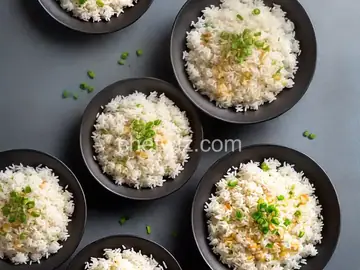
Best Basic White Rice
Rate this recipeBe the first to rate
 By AprilPublished
 Are you tired of ending up with mushy or clumpy white rice? Do you wish to achieve that perfect fluffy texture every time you cook rice?
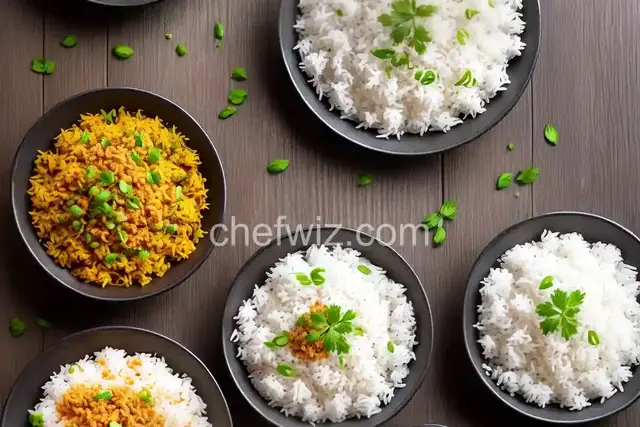 By AprilPublished
 Are you tired of ending up with mushy or clumpy white rice? Do you wish to achieve that perfect fluffy texture every time you cook rice?
In a large saucepan, combine the rice, butter, olive oil, salt, and chicken broth (or water).
Bring the mixture to a boil, leaving the saucepan uncovered. Cook until you notice holes forming on the surface of the rice, indicating tunnels forming within, which takes approximately 15 minutes.
Once the holes have formed, reduce the heat to the lowest setting and cover the saucepan.
Allow the rice to cook for an additional 20 minutes.
After 20 minutes, use a fork to fluff the rice and then it is ready to be served.
Are you tired of ending up with mushy or clumpy white rice? Do you wish to achieve that perfect fluffy texture every time you cook rice? Look no further! In this article, we will guide you on how to make the best basic white rice. No more guessing or trial and error - we've got you covered!
Have you ever wondered why cooking rice can be so challenging? The answer lies in its delicate nature. Rice is like a shy, introverted person - it needs just the right environment and care to truly shine. If it doesn't get enough water, it becomes dry and hard like a desert. On the other hand, if it gets too much water, it becomes mushy and clumps together like quicksand.
So, what's the secret to cooking the perfect white rice? It's all about finding the right balance between water and rice. Think of it as a delicate dance - the rice and water need to move together in harmony. Just like a well-choreographed ballet, the rice absorbs the water slowly and gracefully, resulting in fluffy, separate grains.
Before you start cooking, it's important to rinse the rice thoroughly. This removes any excess starch and prevents the grains from sticking together. Imagine rinsing off the day's dirt and grime from your face - the rice goes through a similar cleansing process.
Now it's time to measure the rice and water. The general rule of thumb is to use a 1:2 ratio - one cup of rice to two cups of water. This ratio ensures that the rice has enough moisture to absorb without becoming overly saturated.
Place the rinsed rice and water in a saucepan and bring it to a boil. Once it reaches a vigorous boil, reduce the heat to low and cover the pan. Let the rice simmer gently, allowing it to absorb the water gradually. This slow and steady process ensures that each grain gets cooked evenly.
After the rice has cooked for about 15-20 minutes, turn off the heat and let it rest for a few minutes. This resting period allows the rice to settle and become even fluffier. Just like a tired athlete needs a break after a marathon, the rice needs some time to regain its strength and structure.
Cooking the best basic white rice doesn't have to be a daunting task. With the right technique and a little practice, you can achieve that perfect fluffy texture every time. Remember to rinse the rice, measure the water and rice accurately, simmer gently, and let it rest before fluffing. Now, go ahead and impress your family and friends with your rice-cooking skills!
A1: On average, white rice takes around 15-20 minutes to cook. However, the cooking time may vary slightly depending on the type of rice and the heat level.
A2: Absolutely! Using broth or stock instead of water adds a delicious flavor to your rice. Just remember to adjust the seasoning accordingly.
A3: It's best to resist the temptation to stir the rice while it's cooking. Stirring can release excess starch and make the rice sticky.
A4: Yes, you can! Rice cookers are convenient appliances that take the guesswork out of cooking rice. Just follow the manufacturer's instructions for the perfect result.
A5: To prevent your rice from burning, make sure to keep an eye on the heat level. If the rice starts sticking to the bottom of the pan, lower the heat and add a little more water.
A6: Absolutely! Adding spices or herbs can elevate the flavor of your rice. Experiment with different combinations to find your favorite.
A7: Yes, you can reheat leftover rice. Just make sure to add a splash of water and cover the dish to retain moisture. Heating it in the microwave or on the stovetop works well.
A8: Yes, you can freeze cooked rice. Allow it to cool completely, then transfer it to a freezer-safe container. When ready to use, thaw it in the refrigerator overnight and reheat as desired.
AprilCook, recipe developer and the heart of Chefwiz. More about April