Basil Pecan Pesto
Rate this recipeBe the first to rate
 By AprilPublished
 Are you a fan of flavors that burst in your mouth with each bite?
 By AprilPublished
 Are you a fan of flavors that burst in your mouth with each bite?
Combine the basil, pecans, garlic, Parmesan cheese, olive oil, salt, and pepper in a food processor.
Blend the ingredients together until they form a slightly chunky paste.
Are you a fan of flavors that burst in your mouth with each bite? If so, you're in for a treat! In this article, we'll delve into the wonderful world of basil pecan pesto. Get ready to learn about this delicious and versatile sauce that will take your dishes to a whole new level of taste and aroma.
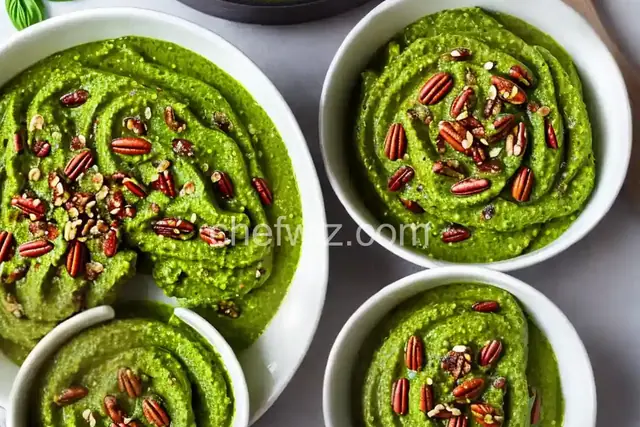
Imagine the freshness of basil leaves combined with the rich and nutty flavor of pecans. When blended together with a touch of garlic, Parmesan cheese, and olive oil, you get the delightful concoction known as basil pecan pesto. It's a vibrant and fragrant sauce that originated in Italy and has become a beloved addition to various dishes around the world.
Basil pecan pesto is a versatile sauce that can be used in countless ways. It's commonly enjoyed with pasta, where it adds a burst of flavor to classic dishes like spaghetti or linguini. Additionally, it can be used as a spread on sandwiches, a dip for bread or vegetables, or even as a topping for grilled meats or roasted vegetables. The possibilities are endless!
Not only does basil pecan pesto taste amazing, but it also offers several health benefits. Basil is known for its antioxidant properties and is a good source of vitamins A, K, and C. Pecans, on the other hand, are packed with heart-healthy monounsaturated fats and essential minerals like zinc and magnesium. So, indulging in basil pecan pesto not only satisfies your taste buds but also provides a nutritional boost.
Creating your own basil pecan pesto is a breeze. All you need are fresh basil leaves, toasted pecans, garlic, Parmesan cheese, olive oil, and a food processor. Simply blend all the ingredients together until you achieve a smooth and creamy consistency. Voila! You now have a homemade basil pecan pesto ready to elevate your culinary creations.
If you have leftover basil pecan pesto or want to make a larger batch for future use, it's important to know how to store it properly. The best way to store pesto is in an airtight container, covered with a thin layer of olive oil to prevent oxidation. It can be kept in the refrigerator for up to a week. Alternatively, you can freeze pesto in ice cube trays for individual portions that can be easily thawed and used as needed.
Basil pecan pesto is a culinary delight that adds a burst of flavor to any dish. Its versatility, health benefits, and ease of preparation make it a must-have in any kitchen. So, why not give it a try and unleash your creativity in the culinary world? Your taste buds will thank you!
Absolutely! While pecans add a unique flavor to basil pesto, you can experiment with other nuts like almonds, walnuts, or pine nuts to create your own variation.
Of course! If you're lactose intolerant or prefer a dairy-free option, you can omit the Parmesan cheese and still enjoy a tasty basil pecan pesto.
When stored properly in an airtight container in the refrigerator, basil pecan pesto can stay fresh for up to a week.
While fresh basil is recommended for the best flavor, you can use dried basil if fresh basil is not available. However, keep in mind that the taste may differ slightly.
Basil pecan pesto complements a wide range of dishes, including pasta, sandwiches, grilled meats, roasted vegetables, and even as a flavorful addition to soups.
Yes, you can freeze basil pecan pesto for future use. Portion it into ice cube trays and freeze. Once frozen, transfer the cubes to a freezer bag for easy storage.
While a food processor is recommended for the best results, you can use a blender if you don't have a food processor. However, you may need to scrape down the sides more frequently to ensure even blending.
Olive oil is traditionally used in basil pecan pesto for its distinct flavor. However, you can experiment with other oils like avocado oil or walnut oil if you prefer a different taste.
AprilCook, recipe developer and the heart of Chefwiz. More about April