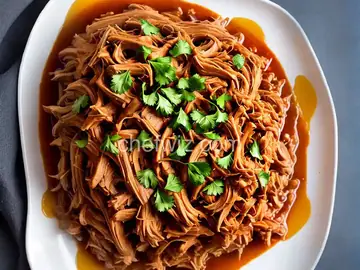
Barbacoa
Rate this recipeBe the first to rate
 By AprilPublished
 Imagine sinking your teeth into tender, juicy meat that has been slow-cooked to perfection.
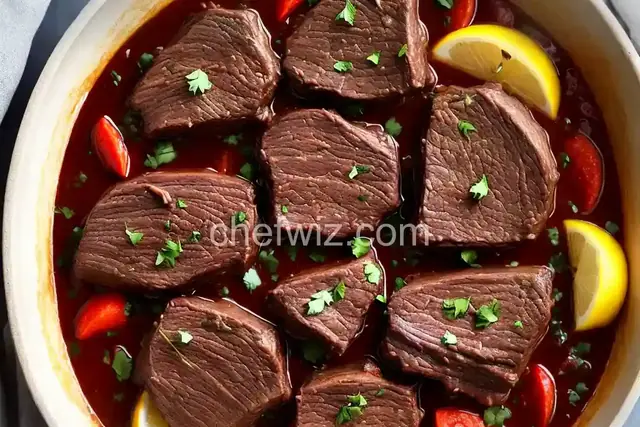 By AprilPublished
 Imagine sinking your teeth into tender, juicy meat that has been slow-cooked to perfection.
Heat a heavy skillet over medium heat.
Place the dried guajillo chiles into the skillet and cook, turning occasionally, until the color changes and the chiles have puffed, for approximately 5 minutes.
Set the chiles aside and allow them to cool for a moment.
In the same skillet, toast the cumin and cloves until the cumin seeds start to pop. Remove from the skillet and set aside.
Remove and discard the stems, seeds, and veins of the chiles. Place the chiles into a small bowl.
Pour boiling water over the chiles in the bowl and cover. Let the chiles soak for 1 hour.
Grind the toasted cumin and cloves into a powder and add it to a blender.
To the blender, add ancho chile powder, onion, garlic, oregano, thyme, vinegar, lime juice, and the soaked chiles along with 1/3 cup of the soaking liquid.
Cover the blender and blend until a smooth paste forms.
Place the beef roast into a mixing bowl and pour the guajillo chile paste over it. Coat the roast on all sides with the paste.
Cover the bowl with plastic wrap and marinate the roast in the refrigerator overnight.
Preheat the oven to 325 degrees F (165 degrees C).
Transfer the roast and marinade to a ro
Imagine sinking your teeth into tender, juicy meat that has been slow-cooked to perfection. The flavors explode in your mouth, leaving you craving for more. This is the magic of barbacoa, a traditional method of cooking meat that has been passed down through generations. In this article, we will delve into the world of barbacoa, exploring the history, techniques, and the mouthwatering results that make it a favorite among food enthusiasts.
Barbacoa traces its roots back to the indigenous tribes of the Caribbean and Central America. The word "barbacoa" is derived from the Arawak language, meaning "sacred fire pit." These tribes would slow-cook meat over an open fire, using techniques that have been refined over centuries.
The key to barbacoa lies in the slow cooking process. Meat is marinated with a blend of flavorful spices and herbs, then placed in a pit lined with banana leaves. The pit is covered, and the meat is left to cook for several hours, allowing the flavors to meld together and the meat to become incredibly tender.
Slow cooking allows the meat to break down, resulting in a melt-in-your-mouth texture that is hard to resist. The low temperature ensures that the meat retains its natural juices, resulting in a moist and succulent dish. This method of cooking also allows the flavors to develop and intensify, creating a truly unforgettable dining experience.
Barbacoa is not limited to a specific type of meat. Different regions and cultures have their own variations, using a variety of meats such as beef, lamb, goat, and even pork. Each meat brings its own unique flavors and characteristics to the dish, making barbacoa a versatile and diverse culinary delight.
From the succulent beef barbacoa of Mexico to the aromatic lamb barbacoa of the Middle East, each region has its own take on this ancient cooking method. The spices and herbs used in the marinade vary, adding a distinct twist to the dish. Whether you prefer the bold and smoky flavors of Texas-style barbacoa or the delicate spices of Indian-style barbacoa, there is a flavor profile to suit every palate.
The experience of enjoying barbacoa goes beyond just the taste. The aroma of the meat as it slowly cooks, the sight of the perfectly charred exterior, and the sound of the sizzle as it hits the plate - all these elements come together to create a sensory explosion. It is a feast for the eyes, nose, and ears, as well as the taste buds.
Barbacoa has a way of bringing people together. It is often enjoyed in a communal setting, where friends and family gather around to share a meal. The slow cooking process allows for conversation and bonding, as the anticipation builds with each passing hour. It is a time to connect, to savor the moment, and to create lasting memories.
Barbacoa is more than just a method of cooking meat. It is a journey into the past, a celebration of flavors, and a testament to the power of slow cooking. From its humble origins to its place on the tables of food lovers around the world, barbacoa continues to captivate our senses and ignite our taste buds.
A1: While traditionally barbacoa is made with beef, you can use other meats like lamb, goat, or pork depending on your preference.
A2: The cooking time can vary depending on the type of meat and the cooking method, but generally, it takes several hours for the meat to become tender and flavorful.
A3: Yes, a slow cooker is a convenient alternative to cooking barbacoa. Just ensure that you adjust the cooking time and temperature accordingly.
A4: Yes, you can use vegetables like jackfruit or mushrooms as a meat substitute to create a delicious vegetarian or vegan version of barbacoa.
A5: Common side dishes include rice, beans, tortillas, salsa, guacamole, and fresh cilantro. These complement the flavors of barbacoa perfectly.
A6: Absolutely! Barbacoa freezes well and can be reheated for future meals. Just make sure to store it in an airtight container.
A7: Yes, you can adjust the level of spice in your barbacoa by adding more or less chili peppers or hot sauce to the marinade.
A8: Absolutely! Barbacoa is a perfect filling for tacos, adding a burst of flavor and a satisfying texture to your favorite tortillas.
Now that you have learned about the fascinating world of barbacoa, why not try making it yourself? Explore different flavors, experiment with marinades, and savor the incredible results. Whether you are enjoying it with loved ones or indulging in a solo feast, barbacoa is sure to leave you craving for more. So, fire up your imagination and embark on a culinary adventure like no other!
AprilCook, recipe developer and the heart of Chefwiz. More about April