Bami Goreng
Rate this recipeBe the first to rate
 By AprilPublished
 Are you a fan of Asian cuisine? Do you crave the perfect combination of flavors, textures, and aromas in your meals?
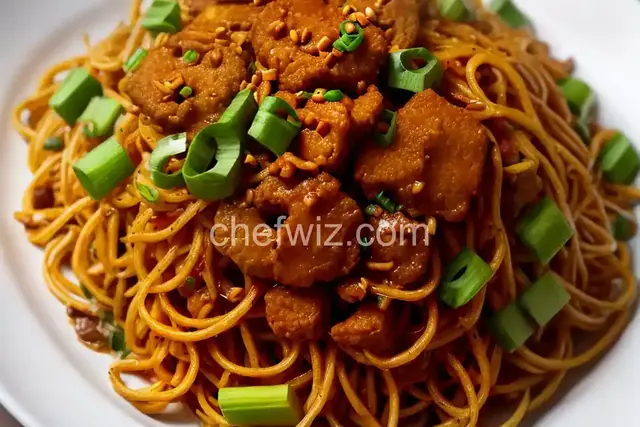 By AprilPublished
 Are you a fan of Asian cuisine? Do you crave the perfect combination of flavors, textures, and aromas in your meals?
Heat canola oil in a small saucepot over medium heat.
Add garlic, ginger, and jalapeno to the pot and sauté for 2 to 3 minutes until fragrant but not browned.
Stir in brown sugar, tamari, five-spice powder, and 1/4 cup water.
Bring the mixture to a simmer and cook for about 10 minutes until the sauce reduces and thickens to coat the back of a spoon.
Remove from heat and set aside.
To make the bami goreng:
Heat canola oil in a 12-inch sauté pan over high heat.
Add red onion, garlic, and ginger to the pan and cook until softened.
Add red pepper to the pan.
Sprinkle salt on the pork tenderloin and add it to the pan; cook until browned on both sides, about 3 to 4 minutes in total.
Stir in cabbage and sambal oelek, then deglaze the pan with 1/4 cup water.
Cook for 2 to 3 minutes until the water evaporates.
Finally, add cooked spaghetti and half of the prepared ketjap sambal to the pan.
Transfer the bami goreng to a large bowl.
Drizzle with the remaining ketjap samb
Are you a fan of Asian cuisine? Do you crave the perfect combination of flavors, textures, and aromas in your meals? Look no further than Bami Goreng, a delectable Indonesian dish that will transport your taste buds to a world of culinary delight. In this article, we will dive into the world of Bami Goreng, its history, ingredients, and how to make it at home. So, grab your wok and let's get started!
Like many dishes, Bami Goreng has a rich history that reflects the diverse cultural influences of Indonesia. This popular stir-fried noodle dish is believed to have originated from Chinese immigrants who settled in Indonesia centuries ago. Over time, it has been adapted to suit Indonesian tastes, resulting in a unique fusion of flavors.
What makes Bami Goreng so special? It's the harmonious blend of ingredients that come together to create a symphony of flavors. The key players in this dish include:
Now that we have our ingredients ready, it's time to put on our chef hats and get cooking! The process of making Bami Goreng is relatively simple:
And there you have it - a plate of mouthwatering Bami Goreng ready to be devoured!
Bami Goreng is more than just a stir-fried noodle dish. It's a culinary adventure that takes you on a journey through the vibrant streets of Indonesia, with each bite offering a symphony of flavors. Whether you're a fan of Asian cuisine or simply looking to expand your culinary horizons, Bami Goreng is a must-try. So, gather your ingredients, fire up your wok, and embark on a flavor-packed experience that will leave you craving more!
Absolutely! While egg noodles are the traditional choice, you can experiment with other types like rice noodles or even spaghetti for a unique twist.
It can be if you want it to be! The level of spiciness can be adjusted to suit your taste preferences by adding more or less chili.
Definitely! Simply skip the meat and seafood and load up on delicious veggies and tofu for a satisfying vegetarian version.
While it's best enjoyed fresh, you can store leftovers in an airtight container in the refrigerator for a day or two. Freezing is not recommended as it may affect the texture of the noodles.
Bami Goreng is a versatile dish that can be customized to suit your taste. Some popular variations include adding Indonesian sambal for extra heat or topping it with a fried egg for an added richness.
While soy sauce is a key component of Bami Goreng, you can try experimenting with different sauces like oyster sauce or hoisin sauce for a unique flavor profile.
Yes, Bami Goreng is a hearty and filling dish that can be enjoyed as a complete meal. However, you can also serve it alongside other Indonesian delicacies like satay or krupuk for a more elaborate feast.
To complement the flavors of Bami Goreng, you can serve it with a side of pickled vegetables or a fresh cucumber salad. These refreshing accompaniments provide a delightful contrast to the rich and savory noodles.
AprilCook, recipe developer and the heart of Chefwiz. More about April