Balsamic-Glazed Sea Scallops
Rate this recipeBe the first to rate
 By AprilPublished
 Sea scallops, also known as the jewels of the sea, are a delicacy that many seafood lovers adore.
 By AprilPublished
 Sea scallops, also known as the jewels of the sea, are a delicacy that many seafood lovers adore.
Pat the scallops dry with a paper towel to remove any excess moisture and to ensure a good sear.
In a small bowl, combine seafood seasoning, salt, and pepper. Use this mixture to lightly season both sides of the scallops.
In a large skillet, heat butter and olive oil over medium-high heat.
Carefully add the scallops to the skillet, being sure not to overcrowd them. Cook until they become golden brown and a crust starts to form, approximately 3 minutes per side. If necessary, cook the scallops in batches to avoid steaming them and be cautious not to overcook.
Once cooked, remove the scallops from the skillet and cover them to keep them warm.
In the same skillet, add white wine, balsamic vinegar, and Dijon mustard. Cook over medium heat while constantly stirring to scrape up the browned bits from the bottom of the skillet. Continue cooking until the glaze slightly thickens and becomes syrupy, approximately 3 to 4 minutes.
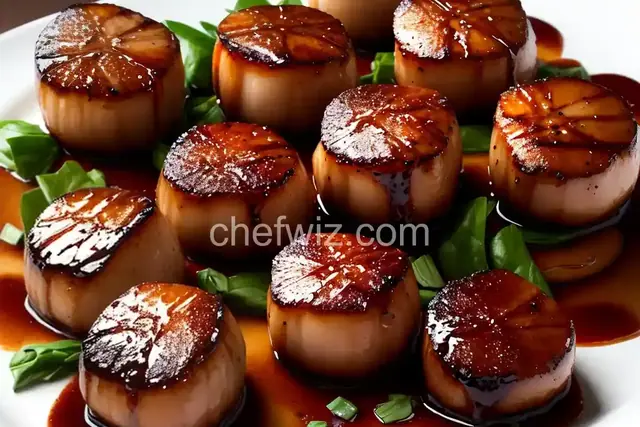
Transfer the scallops to a serving plate and drizzle the glaze on top. Finally, garnish with chopped tarragon.
Sea scallops, also known as the jewels of the sea, are a delicacy that many seafood lovers adore. Their tender, succulent flesh and sweet, buttery flavor make them a favorite choice for elegant meals. One way to elevate the taste of sea scallops to new heights is by glazing them with a rich and tangy balsamic reduction. The combination of the caramelized glaze and the delicate scallops creates a symphony of flavors that will leave your taste buds dancing.
Glazing is a cooking technique that involves coating food with a flavorful sauce or reduction. It adds depth and complexity to the dish, turning ordinary ingredients into extraordinary culinary creations. Just like an artist carefully brushes strokes of color onto a canvas, a skilled cook delicately brushes the glaze onto the scallops, transforming them into a masterpiece.
Not all balsamic vinegars are created equal. To achieve the perfect glaze, it's important to choose a high-quality balsamic vinegar. Look for one that is aged for at least 10 years, as this will have a more robust and complex flavor. A good balsamic vinegar should be thick, syrupy, and slightly sweet, with hints of caramel and fruit. It should also have a pleasant acidity that balances out the sweetness.
The key to creating a luscious glaze is reducing the balsamic vinegar. This process involves simmering the vinegar over low heat until it thickens and becomes syrupy. As the vinegar reduces, its flavors intensify, creating a concentrated and complex glaze. The reduction should be glossy and able to coat the back of a spoon. Be patient during this step, as rushing the process can result in a thin and watery glaze.
Before you can glaze the scallops, it's essential to prepare them properly. Start by patting them dry with a paper towel to remove any excess moisture. This step is crucial because excess moisture can prevent the scallops from searing properly, resulting in a less-than-perfect crust. Once dry, season the scallops with salt and pepper, or any other desired seasonings.
Searing is a cooking technique that involves quickly browning the surface of the scallops over high heat. It locks in the moisture and creates a beautiful golden crust that adds texture and flavor. To achieve the perfect sear, heat a skillet or frying pan over high heat until it's smoking hot. Add a small amount of oil or butter, then carefully place the scallops in the pan, making sure not to overcrowd them. Allow them to cook undisturbed for a few minutes until they develop a golden crust, then flip and repeat on the other side.
Now that the scallops are perfectly seared, it's time to add the balsamic glaze. Using a pastry brush or spoon, carefully coat each scallop with the glaze, making sure to cover all sides. The glaze will cling to the scallops, enhancing their natural sweetness and imparting a delightful tanginess. Once glazed, return the scallops to the pan for a final minute of cooking to allow the flavors to meld together.
Now that your balsamic-glazed sea scallops are ready, it's time to present them in all their glory. Arrange them on a platter, garnish with fresh herbs or a drizzle of extra balsamic glaze, and serve alongside your favorite side dishes. Whether it's a bed of creamy risotto, a refreshing salad, or a medley of roasted vegetables, the glaze will complement the flavors and elevate the entire meal to a whole new level.
Balsamic-glazed sea scallops are a culinary delight that combines the elegance of the sea with the richness of a tangy glaze. The art of glazing transforms simple scallops into a masterpiece, elevating their flavor and presentation. With the right bals
Yes, you can use frozen scallops for this recipe. Just make sure to thaw them completely and pat them dry before cooking.
While balsamic vinegar is the traditional choice for this recipe, you can experiment with other types of vinegar, such as apple cider or red wine vinegar, for a unique twist.
To prevent the glaze from burning, keep a close eye on the heat and adjust it as necessary. If the glaze starts to darken too quickly, reduce the heat or remove the pan from the stove momentarily.
Yes, you can make the glaze in advance and store it in the refrigerator. Just make sure to reheat it gently before using to maintain its smooth, syrupy consistency.
Absolutely! This balsamic glaze pairs well with other seafood, such as shrimp or salmon. It adds a burst of flavor and elegance to any dish.
The scallops are cooked when they are opaque and firm to the touch. Overcooking can result in a rubbery texture, so be sure to keep a close eye on them.
Yes, this glaze can be used for other proteins, such as chicken or pork. It adds a delightful sweetness and tanginess to any dish.
The time it takes to reduce the balsamic vinegar can vary depending on the quantity and heat level. On average, it takes about 10-15 minutes to achieve the desired consistency.
AprilCook, recipe developer and the heart of Chefwiz. More about April