Authentic Seafood Paella
Rate this recipeBe the first to rate
 By AprilPublished
Are you craving a taste of the Mediterranean? Look no further than a mouthwatering dish of authentic seafood paella.
 By AprilPublished
Are you craving a taste of the Mediterranean? Look no further than a mouthwatering dish of authentic seafood paella.
Heat olive oil in a large skillet or paella pan over high heat.
Cook and stir onion, tomato, salt, and smoked paprika in the hot oil until softened, about 3 minutes.
Add romano beans, butter beans, and rice; cook and stir until rice is coated with oil, 2 to 3 minutes.
Place shrimp, mussels, and clams over the top of the rice mixture.
Pour in white wine and seafood stock; sprinkle in saffron threads and rosemary.
Bring the mixture to a simmer.
Turn shellfish and continue to cook until clams and mussels have opened, and shrimp are pink and cooked through, about 5 minutes.
Remove clams, mussels, and shrimp and set aside.
Stir peas into the paella and simmer, uncovered, until rice is tender and has absorbed the liquid, 20 to 25 minutes.
Stir in squid and return clams, mussels, and shrimp to the pan.
Cook until squid is opaque and cooked through, 2 to 3 more minutes.
Serve with lemon wedges and chopped parsley.
Are you craving a taste of the Mediterranean? Look no further than a mouthwatering dish of authentic seafood paella. This Spanish delicacy is a feast for the senses, with its vibrant colors, aromatic flavors, and a delightful combination of seafood and saffron-infused rice. Get ready to embark on a culinary journey as we explore the secrets of making the perfect seafood paella.
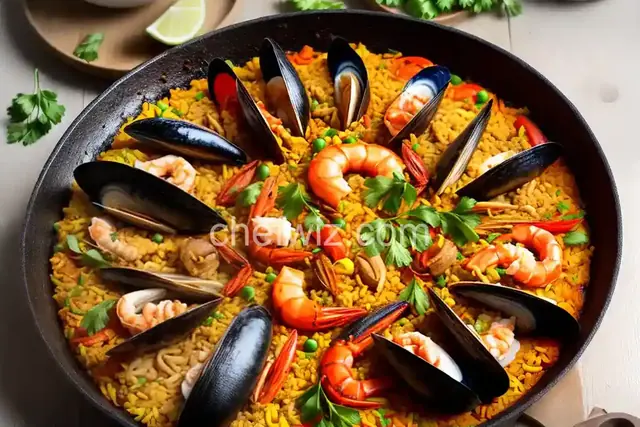
Seafood paella is a traditional dish from the Valencia region of Spain. It is a rice-based dish that combines a variety of fresh seafood, such as shrimp, mussels, clams, and squid, with flavorful spices and vegetables. The star ingredient that gives paella its distinctive yellow hue is saffron, known as the "red gold" of Spain.
Making seafood paella may seem intimidating, but with the right ingredients and a little patience, you can create a delicious masterpiece. Start by sautéing onions, garlic, and bell peppers in a large paella pan. Then add the rice and stir it to coat it with the flavorful mixture. Next, pour in the broth and sprinkle saffron threads to infuse the rice with its signature color and aroma.
Once the rice has absorbed most of the broth, it's time to add the seafood. Arrange the shrimp, mussels, clams, and squid on top of the rice, nestling them into the mixture. Cover the pan and let the seafood steam until cooked through. The key is to cook the seafood just until it turns opaque and tender, ensuring it remains juicy and flavorful.
One of the highlights of a good seafood paella is the socarrat, a crispy layer of rice that forms on the bottom of the pan. To achieve this coveted texture, increase the heat during the last few minutes of cooking. This will create a caramelized crust that adds a delightful crunch to every bite.
Here are some tips to help you master the art of seafood paella:
Authentic seafood paella is a culinary delight that brings the flavors of the Mediterranean to your table. With its combination of fresh seafood, aromatic spices, and saffron-infused rice, it is a dish that will transport you to the sunny shores of Spain. So, gather your ingredients, grab a paella pan, and indulge in the rich flavors of this traditional Spanish delicacy.
Yes, you can use frozen seafood, but fresh seafood will always yield the best flavor and texture.
While saffron is the traditional spice used in paella, you can substitute it with turmeric or paprika for a similar color and flavor.
Absolutely! You can experiment with adding vegetables like peas, artichokes, or roasted red peppers for extra flavor and texture.
While a paella pan is ideal, you can use a large skillet with a wide surface area to make seafood paella.
The rice should be tender and have absorbed most of the liquid, with a slightly al dente texture.
Seafood paella is best enjoyed fresh, but you can reheat leftovers in a skillet with a splash of broth or water.
Traditionally, seafood paella does not contain meat, but you can add chicken, chorizo, or other meats for a twist on the classic recipe.
Allow the paella to cool completely, then transfer it to an airtight container and refrigerate for up to 3 days.
AprilCook, recipe developer and the heart of Chefwiz. More about April