Authentic Pizza Margherita
Rate this recipeBe the first to rate
 By AprilPublished
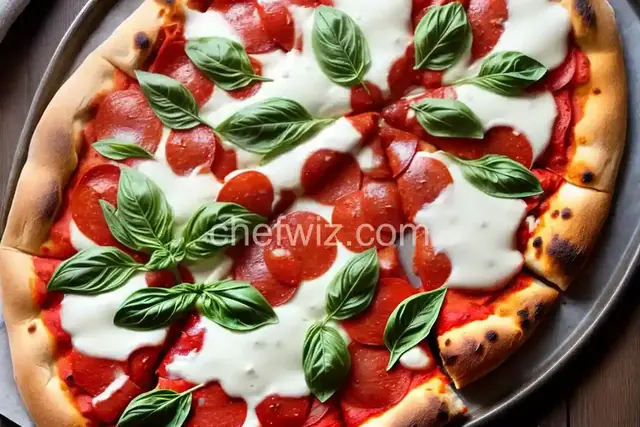
 When it comes to iconic Italian cuisine, few dishes can rival the simplicity and flavor of an authentic Pizza Margherita.
 By AprilPublished
 When it comes to iconic Italian cuisine, few dishes can rival the simplicity and flavor of an authentic Pizza Margherita.
In a bowl, combine flour and 1 teaspoon of salt and mix well. Set aside.
In a large bowl, mix together water, yeast, and sugar. Allow the mixture to stand for approximately 5 minutes, until the yeast begins to form a creamy foam.
Gradually stir in half of the flour mixture into the yeast mixture, ensuring there are no dry spots. Then, add the remaining flour, half a cup at a time, and mix well after each addition. Once the dough starts to come together, transfer it onto a lightly floured surface and knead for about 8 minutes until it becomes smooth and elastic.
Lightly oil a large bowl, then place the dough into the bowl and turn it around to coat it with oil. Cover the bowl with a light cloth and leave it in a warm place (around 80 to 95 degrees F or 27 to 35 degrees C) to rise for approximately 1 hour, or until it doubles in volume.
Punch the dough down, then divide it into 4 equal pieces and shape each piece into a ball.
Preheat the oven, along with a pizza stone, to 500 degrees F (260 degrees C).
Take one of the dough balls and stretch it out, patting it to form a circle with a diameter of 10 to 12 inches. Place the dough on a lightly floured pizza peel.
Spread 1/
When it comes to iconic Italian cuisine, few dishes can rival the simplicity and flavor of an authentic Pizza Margherita. This classic pizza, named after Queen Margherita of Italy, showcases the perfect harmony of fresh ingredients and traditional techniques. But what makes a Pizza Margherita truly authentic? Let's dive into the history, ingredients, and preparation of this beloved Italian delicacy.
The story of Pizza Margherita traces back to the late 19th century in Naples, Italy. Legend has it that renowned pizzaiolo Raffaele Esposito created this masterpiece to honor Queen Margherita during her visit to Naples. He combined the colors of the Italian flag - red tomatoes, white mozzarella cheese, and green basil leaves - to represent the nation's unity and pride.
Since then, Pizza Margherita has become a symbol of Italian culinary heritage, gaining worldwide popularity and inspiring countless variations. However, to truly experience the authentic flavors, it's essential to stick to the traditional recipe and techniques.
An authentic Pizza Margherita requires a handful of high-quality and fresh ingredients. The dough, made from flour, water, yeast, and salt, forms the foundation of the pizza. It should be kneaded to perfection, resulting in a thin and crispy crust that complements the toppings.
The sauce is another crucial component. It consists of San Marzano tomatoes, known for their rich flavor and low acidity, which are crushed and seasoned with a pinch of salt and a drizzle of olive oil. This simple yet vibrant tomato sauce adds a burst of freshness to the pizza.
When it comes to cheese, only the finest mozzarella di bufala should be used. Made from the milk of water buffaloes, this cheese has a delicate flavor and a creamy texture that melts beautifully over the pizza. Fresh basil leaves are the final touch, adding a fragrant and herbaceous note to the ensemble.
Creating a truly authentic Pizza Margherita is not just about the ingredients; it's also about the skill and technique involved in the process. The dough needs to be carefully stretched and shaped by hand, ensuring an even thickness and avoiding any air bubbles.
Traditionally, the pizza is cooked in a wood-fired oven at a high temperature, allowing the crust to develop a delightful char and a slight smoky flavor. The pizza should be rotated during baking to ensure even cooking and achieve that perfect balance between crispy and chewy.
Once out of the oven, the Pizza Margherita is drizzled with a bit of extra virgin olive oil and sprinkled with a pinch of salt. It is then sliced into wedges and served piping hot, ready to be enjoyed by pizza enthusiasts around the world.
Pizza Margherita is not just a pizza; it's a culinary masterpiece that represents the rich history and culture of Italy. By honoring the traditional recipe and techniques, you can savor the true essence of this iconic dish. So, gather your ingredients, roll up your sleeves, and embark on a pizza-making adventure that will transport your taste buds to the streets of Naples.
While San Marzano tomatoes are the preferred choice for an authentic Pizza Margherita, you can use regular tomatoes if you can't find them. Just make sure to choose ripe, flavorful tomatoes to enhance the taste.
While fresh basil provides a vibrant and aromatic flavor, you can use dried basil as a substitute if fresh basil is not available. However, keep in mind that the taste may differ slightly.
While mozzarella di bufala is the traditional choice, you can use regular mozzarella cheese if you can't find the buffalo variety. It will still result in a delicious Pizza Margherita.
It's best to enjoy Pizza Margherita fresh out of the oven. Freezing the pizza may alter its texture and taste. However, if you have leftovers, you can store them in the refrigerator and reheat them in the oven for a few minutes.
Although the essence of Pizza Margherita lies in its simplicity, you can experiment with additional toppings if you wish. Just remember that traditionalists prefer to savor the flavors of the original recipe.
Yes, Pizza Margherita is a vegetarian pizza as it does not contain any meat or animal by-products. It's a perfect choice for those following a vegetarian diet.
The best flour for Pizza Margherita is a high-protein flour, such as Tipo 00. This type of flour ensures a light and tender crust.
While a wood-fired oven provides an authentic touch, you can still make a delicious Pizza Margherita in a conventional oven. Just make sure to preheat the oven to the highest temperature possible and use a pizza stone or baking sheet to mimic the effect of a wood-fired oven.
AprilCook, recipe developer and the heart of Chefwiz. More about April