A Pad Thai Worth Making
Rate this recipeBe the first to rate
 By AprilPublished
 Are you a fan of Thai cuisine? Have you ever tried Pad Thai? If not, you're missing out on one of the most popular and delicious dishes from Thailand.
 By AprilPublished
 Are you a fan of Thai cuisine? Have you ever tried Pad Thai? If not, you're missing out on one of the most popular and delicious dishes from Thailand.
Fill a large bowl with hot tap water and soak the noodles for 20 minutes.
In a small bowl, mix together lime juice, chicken stock, fish sauce, oyster sauce, sugar, and 2 teaspoons of chile sauce. Set aside.
Heat a wok or large skillet over high heat and add vegetable oil. Once the oil is hot, add garlic and cook for about 10 seconds.
Add shrimp and chicken to the wok and cook, stirring constantly, until the shrimp turns opaque and the chicken is cooked through (around 5 to 7 minutes).
Push everything in the wok to the sides and pour the beaten eggs in the center. Cook and stir the eggs until they become firm.
Add the soaked noodles to the wok and pour in the sauce. Cook and stir constantly until the noodles become tender. If needed, add a little more water to finish cooking the noodles.
Stir in 3 cups of bean sprouts, green onions, and the remaining chile sauce. Remove from heat and garnish with chopped peanuts. Taste and adjust the seasoning with more spice or lime juice if desired.
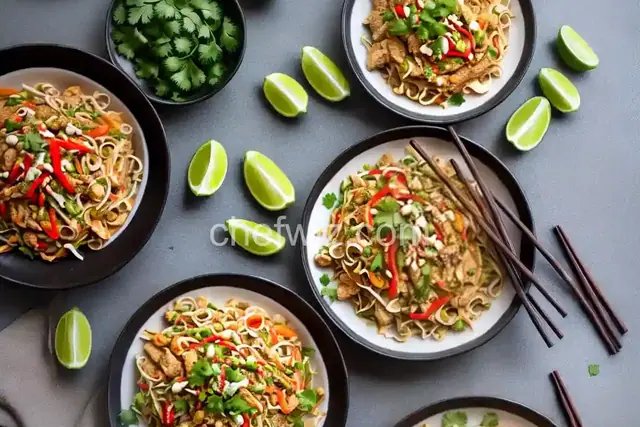
Serve the dish garnished with the remaining 2 cups of bean sprouts, fresh cilantro, and lime wedges on the side.
Are you a fan of Thai cuisine? Have you ever tried Pad Thai? If not, you're missing out on one of the most popular and delicious dishes from Thailand. Pad Thai is a stir-fried noodle dish that is packed with flavor and offers a delightful combination of sweet, sour, and savory notes. In this article, we will explore the art of making a Pad Thai worth savoring.
Picture this: Chewy rice noodles perfectly coated in a tangy sauce, accompanied by juicy shrimp, tender chicken, or crispy tofu. The dish is adorned with vibrant vegetables, such as bean sprouts, green onions, and crushed peanuts, adding a delightful crunch and freshness to every bite. The flavors are balanced, with a hint of sweetness from palm sugar, a tanginess from tamarind paste, and the umami richness of fish sauce.
Just like a symphony, Pad Thai is a harmonious blend of flavors and textures. It's a dish that captures the essence of Thai cuisine - bold, vibrant, and utterly satisfying.
What makes a Pad Thai truly exceptional? It's all about achieving the perfect balance of flavors. The sweetness of the palm sugar should not overpower the tanginess of the tamarind paste, and the umami notes from the fish sauce should be well-balanced with the other ingredients. Achieving this delicate balance is an art that requires practice and experimentation.
Think of it like a tightrope walker. They carefully navigate the thin line, ensuring they don't lean too far to one side and lose their balance. Similarly, when making Pad Thai, you need to tread carefully, adding just the right amount of each ingredient to create a harmonious blend of flavors.
Creating a Pad Thai worth making requires mastering the technique of stir-frying. The secret lies in high heat and quick cooking. You want to achieve a perfect balance between a slight char on the noodles and keeping them tender and chewy.
It's like a dance - the noodles sizzle and move gracefully in the hot wok, as you toss them with precision and finesse. The aromas fill the air, and the sound of the sizzling noodles is music to your ears. It's a mesmerizing process that requires focus, but the end result is well worth the effort.
While there are traditional ingredients that make up a classic Pad Thai, don't be afraid to unleash your creativity and personalize the dish. Add your favorite proteins, such as succulent shrimp or tender chicken. Experiment with different vegetables to add color and texture. You can even try substituting the rice noodles with zucchini noodles for a healthier twist.
Think of Pad Thai as a canvas, and you are the artist. Let your imagination run wild and create a masterpiece that suits your taste buds. After all, cooking is an art form, and Pad Thai is your blank canvas.
So, what makes a Pad Thai worth making? It's the passion that goes into each step, the balance of flavors, and the creativity that sets your version apart. It's an opportunity to transport your taste buds to the vibrant streets of Thailand and experience the magic of Thai cuisine.
Pad Thai is more than just a dish. It's an experience that takes your taste buds on a journey to the bustling streets of Thailand. With the right ingredients, technique, and a touch of creativity, you can create a Pad Thai worth making. So, why not embark on this culinary adventure and savor the flavors of Thai cuisine in the comfort of your own kitchen?
Yes, you can substitute fish sauce with soy sauce or tamari for a vegetarian or vegan version of Pad Thai.
Traditionally, Pad Thai is made with rice noodles, but you can experiment with other noodles like egg noodles or even spaghetti.
While Pad Thai is best enjoyed freshly cooked, you can make the sauce and prep the ingredients in advance to save time.
To prevent the noodles from sticking together, rinse them under cold water after cooking and toss them with a little oil.
Absolutely! If you enjoy a little heat, you can add chili flakes or Sriracha sauce to your Pad Thai for an extra kick.
Yes, if you have a peanut allergy or simply don't like peanuts, you can omit them from the recipe. You can substitute with cashews or leave them out altogether.
The traditional Pad Thai recipe uses rice noodles, which are gluten-free. However, you should check the labels of the sauces and condiments you use to ensure they are gluten-free.
Yes, you can omit the eggs from the recipe to make a vegan version of Pad Thai. The dish will still be flavorful and delicious.
AprilCook, recipe developer and the heart of Chefwiz. More about April