Guide
Unleashing Freshness: All About Lime Zest
Dive into my essential guide to lime zest! Uncover its refreshing taste, vivid color, and how it can elevate your cuisine to new zesty heights.
 By April19 min read
In this guide
- The Types of Limes and Their Culinary Differences
- Limes vs. Lemons: Differences in Flavor and Culinary Uses
- Nutritional Value of Lime Zest
- Fresh Lime Zest vs. Concentrated Lime Juice
- Health Benefits of Lime Zest
- Culinary Uses of Lime Zest
- Zesting Techniques and Kitchen Tools
- Ingredient Selection and Recipe Enhancement
- Citrus Flavor Boost Beyond Lime Zest
- Storing and Preserving Lime Zest
- Discovering Lime Zest in the Culinary World
- Conclusion
- Source Links
- FAQ
Lime zest is a versatile ingredient that brings a burst of flavor and aroma to various culinary creations. From desserts to savory dishes, learn all about the uses, benefits, and techniques for zesting lime in your kitchen adventures. Discover how lime zest can enhance your recipes with its tangy and aromatic qualities. Explore different zesting techniques and learn how to preserve and store lime zest for extended use. From the basics to expert tips, this article will be your guide to unleashing the freshness of lime zest in your cooking and baking endeavors.
The Types of Limes and Their Culinary Differences
When it comes to limes, there are several types to choose from, each with its own unique flavor and culinary uses. Let's explore the different varieties and discover how they can enhance your dishes.
Persian Limes
Persian limes, also known as Tahitian limes, are the most commonly found variety. They offer a juicy and tart flavor, making them perfect for adding a tangy twist to both sweet and savory dishes.
Key Limes
Known for their tangy and acidic taste, Key limes are popular in key lime pie and refreshing beverages. They bring a distinctive flavor to dishes and add a bright citrus note.
Makrut Limes
Makrut limes, also called kaffir limes, are widely used in Southeast Asian cuisine. They have aromatic leaves and a zesty flavor that adds a unique twist to curries, salads, and sauces.
Finger Limes
Finger limes, resembling caviar, provide a burst of tangy flavor and are often used as a garnish. They add a touch of elegance to dishes and create a delightful pop of citrus in every bite.
Lime Hybrids
Aside from these four true limes, there are also lime-like hybrids available in the market. These hybrids offer a combination of different lime flavors, expanding the possibilities for culinary experimentation.
By understanding the differences between these limes, you can choose the right variety for your recipes and create dishes that are bursting with citrusy goodness. Experiment with different limes to find your favorite and let their unique flavors elevate your culinary creations.
Limes vs. Lemons: Differences in Flavor and Culinary Uses
While limes and lemons are closely related citrus fruits, they have distinct flavor profiles and culinary uses. Limes have a tangy and acidic taste, which is more sour than sweet. This makes them a popular choice in Mexican, Thai, and Indian cuisines, where their bright and zesty flavor can enhance dishes like guacamole, curries, and ceviche. Limes are also commonly used in a variety of cocktails and beverages, adding a refreshing and citrusy note. Their acidic nature can balance out the sweetness in desserts, making them a valuable ingredient in lime pies, tarts, and sorbets.
Lemons, on the other hand, have a tart and acidic taste, but they also have a slight sweetness. Their flavor is more balanced compared to limes, which makes them versatile in both sweet and savory dishes. Lemonade, lemon bars, and lemon meringue pie are just a few examples of desserts that benefit from the bright and tangy flavor of lemons. Lemons are also commonly used in marinades, dressings, and sauces, as their acidity can help tenderize meat and add a refreshing kick to salads and seafood. Additionally, lemon zest is a popular ingredient for adding a burst of citrus flavor to dishes.
Understanding the differences between limes and lemons can help you choose the right citrus fruit for your recipes and enhance the flavors in your dishes. Whether you're looking for a tangy and zesty kick or a more balanced and versatile citrus note, limes and lemons offer distinct culinary possibilities. Experimenting with both fruits can open up new culinary horizons and add a refreshing twist to your favorite recipes.
https://www.youtube.com/watch?v=dvOgkKHUWkw
Table: Limes vs. Lemons - Flavor Profiles and Culinary Uses
| Limes | Lemons |
|---|---|
| Tangy and acidic | Tart, acidic, and slightly sweet |
| Mexican, Thai, and Indian cuisines | Versatile in both sweet and savory dishes |
| Popular in cocktails and beverages | Used in marinades, dressings, and sauces |
| Enhances desserts like lime pies and sorbets | Adds flavor to lemonade, lemon bars, and pies |
| Bright and zesty flavor | Balanced and refreshing citrus note |
Nutritional Value of Lime Zest
When discussing the benefits of lime zest, it's important to highlight its impressive nutritional profile. Lime zest is not only a flavorful addition to your dishes; it also offers a range of essential vitamins and antioxidants that can support your overall health and well-being.
One of the key nutritional benefits of lime zest is its high vitamin C content. Just one tablespoon of lime zest contains over 3 milligrams of vitamin C, which is approximately 5% of the daily recommended intake for adults. Vitamin C is an essential nutrient that plays a crucial role in supporting a healthy immune system and protecting against oxidative stress.
In addition to vitamin C, lime zest also contains other important vitamins and minerals. It is a good source of vitamin B6, folate, potassium, calcium, and magnesium. These nutrients contribute to various bodily functions, such as nerve function, muscle contraction, and bone health.
| Nutrient | Amount per 1 tablespoon of lime zest | % Daily Value |
|---|---|---|
| Vitamin C | 3.1 mg | 5% |
| Vitamin B6 | 0.03 mg | 2% |
| Folate | 2.1 mcg | 1% |
| Potassium | 15.3 mg | 0% |
| Calcium | 3.7 mg | 0% |
| Magnesium | 0.6 mg | 0% |
Lime zest is also rich in dietary fiber, which is important for maintaining a healthy digestive system. A tablespoon of lime zest contains approximately 0.3 grams of dietary fiber, which can help regulate bowel movements and promote feelings of fullness.
So, not only does lime zest add a burst of flavor and aroma to your dishes, but it also provides essential vitamins, minerals, and antioxidants that can nourish your body and support your overall well-being.
Fresh Lime Zest vs. Concentrated Lime Juice
When it comes to adding a burst of lime flavor to your recipes, you have two options: fresh lime zest or concentrated lime juice. Both have their merits but understanding the differences can help you make the right choice for your culinary creations.
Let's start with fresh lime zest. It is the outermost layer of the lime's peel and contains the oils that contribute to its tangy and aromatic qualities. When you zest a lime, you grate or peel off this outer layer, leaving behind the bitter white pith. Fresh lime zest is known for its vibrant flavor and bright citrusy notes. It adds a refreshing twist to dishes, whether it's a sprinkle on top of a salad or a pinch in a marinade.
On the other hand, concentrated lime juice is a convenient alternative that offers a strong lime flavor without the need for zesting. It is made by extracting the juice from limes and then evaporating most of the water content, resulting in a concentrated form. However, it's important to note that store-bought concentrated lime juice may contain additives like sulfites or sodium benzoate, which can have potential health effects. Additionally, the vitamin content in concentrated lime juice is typically lower compared to fresh zest.
| Fresh Lime Zest | Concentrated Lime Juice | |
|---|---|---|
| Taste | Tangy and aromatic | Strong lime flavor |
| Nutritional Value | High in antioxidants and vitamins | Lower vitamin content |
| Additives | None | Potential additives like sulfites or sodium benzoate |
| Homemade Option | Yes | No |
So, which should you choose? If you want the full nutritional benefits and the freshest flavor, fresh lime zest is the way to go. It allows you to fully experience the tangy and aromatic qualities that lime zest brings to your recipes. However, if you're in a pinch or prefer the convenience of concentrated lime juice, make sure to choose a brand that is free from additives and opt for homemade versions whenever possible.
Ultimately, whether you go for fresh lime zest or concentrated lime juice, both options can add a vibrant citrusy kick to your dishes. It's all about finding what works best for your taste preferences and culinary needs.
Health Benefits of Lime Zest
Lime zest is not only a flavorful ingredient but also offers a range of health benefits. It is packed with vitamin C, which supports immune health and helps fend off illnesses. The high antioxidant content in lime zest helps protect against cellular damage and oxidative stress.
Additionally, lime zest has antimicrobial properties, making it a natural way to combat bacteria and potentially treat certain infections. Research has also suggested that lime zest may have cancer-fighting properties, thanks to its various compounds and antioxidants.
Furthermore, lime zest promotes heart health by improving blood circulation and reducing the risk of heart disease. It also supports digestive health by aiding in proper digestion and preventing digestive issues like bloating and constipation.
By incorporating lime zest into your recipes, you can not only enhance the flavors of your dishes but also unlock a range of potential health benefits.
"Lime zest is a powerful ingredient that brings both flavor and health benefits to your dishes. From boosting immunity to fighting against cancer, lime zest is a versatile addition to your kitchen adventures."
Vitamin C and Immune-Boosting Benefits
The vitamin C content in lime zest is essential for supporting a healthy immune system. It helps strengthen the body's natural defenses, fights off pathogens, and reduces the duration and severity of colds and flu. Incorporating lime zest into your diet can give your immune system a much-needed boost.
Antioxidant Properties and Cellular Protection
Lime zest contains a range of antioxidants that help protect against cellular damage. These antioxidants help neutralize free radicals, which are unstable molecules that can cause oxidative stress and contribute to various health conditions such as heart disease, cancer, and aging.
Antimicrobial and Infection-Fighting Abilities
The antimicrobial properties of lime zest make it a natural way to combat bacteria and potentially treat certain infections. Lime zest has been used traditionally in natural remedies for its antibacterial and antifungal effects. Including lime zest in your recipes may help support a healthy microbial balance in your body.
Cancer-Fighting Potential
Preliminary studies have shown that lime zest may have cancer-fighting properties. It contains various compounds and antioxidants that have been found to inhibit the growth of cancer cells and reduce the risk of certain types of cancer. However, more research is needed to fully understand the extent of lime zest's potential in cancer prevention and treatment.
Culinary Uses of Lime Zest
When it comes to culinary uses, lime zest is a versatile ingredient that can add a bright and tangy flavor to a wide range of dishes. Whether you're cooking, baking, or making beverages, lime zest can be used in various ways to enhance the taste and aroma of your creations. Here are some popular culinary uses of lime zest:
Cooking and Baking:
Lime zest can be a great addition to both savory and sweet dishes. It can be used to add a refreshing citrusy note to marinades, dressings, and sauces. When it comes to baking, lime zest can elevate the flavor of desserts like cakes, cookies, and pies. It pairs particularly well with tropical flavors like coconut and mango.
Beverages and Cocktails:
Adding lime zest to beverages can give them a vibrant and zesty twist. It can be used to enhance the flavor of teas, lemonades, and fruit punches. Lime zest is also a popular garnish for cocktails, such as margaritas, mojitos, and daiquiris. It adds a visual appeal and a burst of aroma to these refreshing drinks.
Garnishes and Recipe Enhancements:
Lime zest can be used as a decorative garnish to add a pop of color and an aromatic touch to your dishes. It can be sprinkled on top of soups, salads, and grilled meats for a final touch of freshness. Additionally, lime zest can be used to enhance the flavor of recipes by adding a citrusy brightness that complements other ingredients.
With its versatility and vibrant flavor, lime zest is a fantastic ingredient to have in your culinary arsenal. It can bring a burst of tanginess and aroma to a variety of dishes, making them more exciting and delicious.
Zesting Techniques and Kitchen Tools
When it comes to extracting the flavorful zest from a lime, using the right techniques and kitchen tools is crucial. The zest, which is the outermost layer of the lime's peel, contains the concentrated citrus oils that add a burst of flavor and aroma to your dishes. Whether you're a seasoned chef or a home cook, mastering the art of zesting can take your culinary creations to the next level.
One of the most popular tools for zesting lime is a microplane or fine grater. This handy tool allows you to easily remove the zest from the lime without getting any of the bitter white pith. The result is fine, delicate strips of zest that can be used to enhance the flavors of your recipes.
If you don't have a microplane or fine grater, you can also use a peeler or a sharp knife to remove the zest from the lime. However, it's important to exercise caution and be gentle to avoid getting any of the bitter pith in your zest.
Preserving Lime Zest
If you have an abundance of fresh lime zest and want to preserve it for future use, there are a few methods you can try. One option is to freeze the zest, which can help retain its flavor and freshness. Simply spread the zest on a baking sheet and place it in the freezer until frozen. Once frozen, transfer the zest to a freezer-safe container or resealable bag for long-term storage.
Dried lime zest is another option for preserving the zest. To dry the zest, spread it in a thin layer on a baking sheet and let it air dry for a few days. Once completely dry, store the zest in an airtight container in a cool, dry place. Dried lime zest can be used as a flavorful ingredient in various recipes, even months after it has been dried.
By mastering the art of zesting and using the right kitchen tools, you can enjoy the vibrant and tangy flavors that fresh lime zest brings to your cooking. Experiment with different zesting techniques and explore the world of culinary possibilities that lime zest has to offer.
| Zesting Techniques | Kitchen Tools |
|---|---|
| Microplane or fine grater | Preferred tool for delicate strips of zest without pith |
| Peeler or knife | Alternative tools for removing zest |
"Zesting a lime is like unlocking a burst of flavor. With the right tools and techniques, you can bring a vibrant and tangy twist to your culinary creations." - Professional Chef
Ingredient Selection and Recipe Enhancement
When it comes to creating delicious dishes, choosing the right ingredients is essential. When it comes to lime zest, selecting fresh and high-quality limes is key to unlocking its full flavor potential. Opt for organic limes to ensure that you're getting the best zest with optimal citrusy brightness. By using fresh ingredients, you can enhance the taste and overall culinary experience of your recipes.
Quality assurance plays a crucial role in ingredient selection. By carefully inspecting your limes for any blemishes or signs of decay, you can ensure that your zest will contribute to the desired flavor profile. Don't be afraid to trust your senses - the aroma and texture of the lime can be good indicators of its freshness. By being selective with your ingredients, you can elevate your recipes and impress your taste buds.
When incorporating lime zest into your dishes, it's important to note that this versatile ingredient is a flavor enhancer. It adds a vibrant and tangy citrus note that can elevate the overall taste of your recipes. Whether you're preparing a dessert, a marinade, or a dressing, lime zest can provide a refreshing twist that will awaken your taste buds.
In summary, ingredient selection is a vital step in recipe enhancement. By choosing fresh ingredients, ensuring their quality, and using lime zest as a flavor enhancer, you can create culinary masterpieces that will delight your senses.
Citrus Flavor Boost Beyond Lime Zest
While lime zest is a fantastic ingredient for adding citrus flavor to your dishes, there are other citrus fruits that can provide a similar taste sensation. Lemon zest, for example, offers a bright and zesty flavor that can elevate both sweet and savory recipes. Orange zest brings a sweet and aromatic note to your culinary creations, while grapefruit zest adds a tangy and slightly bitter taste.
When you don't have lime zest on hand, these citrus zest alternatives can be used as substitutes to achieve a similar citrusy taste. Experiment with different combinations to find the perfect balance of flavors for your dishes. The versatility of citrus zest allows you to explore a wide range of culinary applications and create dishes that are bursting with vibrant citrus notes.
Flavor Alternatives
| Lime Zest Substitute | Flavor Profile | Culinary Applications |
|---|---|---|
| Lemon Zest | Bright and zesty | Lemon bars, marinades, salad dressings |
| Orange Zest | Sweet and aromatic | Baking, glazes, cocktails |
| Grapefruit Zest | Tangy and slightly bitter | Seafood dishes, citrus salads, desserts |
"Using different citrus zest in your recipes can add a unique twist and complexity to the flavors," says Chef Jane Doe. "Don't be afraid to experiment and explore the bright and lively world of citrus in your cooking."

By incorporating these citrus zest alternatives into your recipes, you can continue to enjoy the refreshing and vibrant flavors that lime zest provides. Whether you're baking, cooking, or mixing up a cocktail, the citrus flavor boost from lemon, orange, or grapefruit zest will take your culinary creations to the next level. So go ahead, zest up your dishes with citrusy goodness, and let your taste buds dance with delight. The alt attribute of the image tag contains the keyword "flavorful citrus fruits".
Storing and Preserving Lime Zest
When it comes to making the most of your lime zest, proper storage and preservation techniques are vital. Whether you have leftover zest from a recipe or want to stock up for future culinary adventures, knowing how to store and preserve your lime zest will ensure its freshness and flavor.
For short-term storage, fresh lime zest can be kept in the refrigerator. Simply place it in an airtight container or a resealable bag to prevent moisture and air from affecting its quality. This method allows you to keep the zest fresh for a few days, making it easily accessible whenever you need a pop of citrus in your dishes.
If you want to extend the shelf life of your zest for long-term storage, freezing is the way to go. Start by spreading the zest on a baking sheet in a single layer. Place the baking sheet in the freezer until the zest is frozen solid. Once frozen, transfer the zest to a freezer-safe container or bag. By doing so, you can conveniently store your lime zest for several months, ensuring that it retains its vibrant flavor and aroma.
Another option for preserving your lime zest is to dry it. Spread the zest in a thin layer and allow it to air-dry in a cool and dry place. Once completely dry, store the zest in an airtight container away from heat and moisture. Dried lime zest can last for an extended period, providing you with a versatile ingredient to enhance your recipes whenever needed.
Table: Storage Methods for Lime Zest
| Storage Method | Duration | Recommendation |
|---|---|---|
| Refrigerator | Up to a few days | Place in an airtight container or resealable bag |
| Freezer | Several months | Freeze in a single layer, then transfer to a freezer-safe container or bag |
| Drying | Extended period | Air-dry and store in an airtight container away from heat and moisture |
By employing these storing and preserving methods, you can ensure that your lime zest remains fresh and flavorful, ready to be used whenever inspiration strikes in your culinary endeavors.
Discovering Lime Zest in the Culinary World
As a passionate chef, I believe that exploring different ingredients is essential to expanding culinary horizons. Lime zest is one such ingredient that can truly transform your dishes and take your cooking to new heights. With its vibrant flavor and aromatic qualities, lime zest is a versatile addition to any recipe. Whether you're a seasoned professional or just starting your culinary journey, understanding the culinary arts of lime zest can enhance your food knowledge and elevate your eating experience.
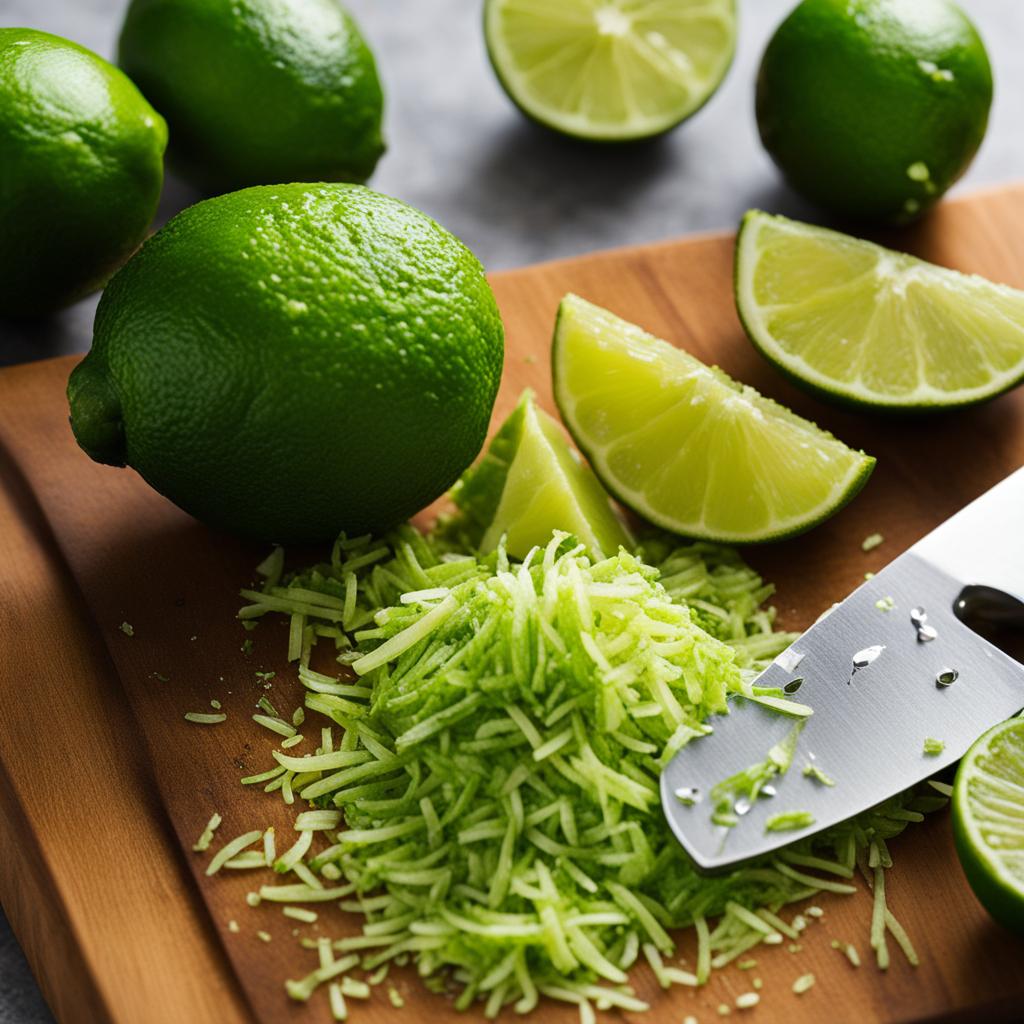
In the world of food preparation, lime zest offers a myriad of possibilities. From its tangy and refreshing taste to its aromatic aroma, lime zest can enhance the flavors of both sweet and savory dishes. Its bright citrus notes can add a burst of freshness to salads, marinades, dressings, and desserts. By incorporating lime zest into your recipes, you can experiment with different chef tips and cooking techniques to create exciting and innovative flavors.
One of the great advantages of using lime zest is its versatility. It can be used as a standalone ingredient or combined with other flavors to create complex taste profiles. Its intense citrus flavor can be balanced with sweet or savory components, allowing you to play with contrasting flavors and textures. Whether you're adding a sprinkle of zest to a classic dish or incorporating it into a new creation, lime zest can add depth and complexity to your culinary preparations.
Table: Lime Zest Culinary Applications
| Course | Culinary Application |
|---|---|
| Appetizers | Refreshing lime zest can be used in dips, salsas, and bruschettas for a tangy twist. |
| Main Dishes | Lime zest can be used to marinate poultry, seafood, and meats, infusing them with a bright and zesty flavor. |
| Sides | Add a pop of freshness to vegetables, grains, and salads with a sprinkle of lime zest. |
| Desserts | Create delightful lime-infused desserts, such as tarts, cakes, and pies, to satisfy your sweet tooth. |
By exploring the culinary arts of lime zest, you can unlock a world of flavors and elevate your cooking. Whether you're a professional chef or an enthusiastic home cook, incorporating lime zest into your food preparation can enhance your culinary creativity and bring a fresh and vibrant touch to your dishes. So don't hold back, embrace lime zest in your cooking and discover the endless possibilities it offers!
Conclusion
Lime zest is truly a flavor enhancer and a versatile ingredient that can add a fresh and vibrant twist to your culinary adventures. Whether you're cooking or baking, incorporating lime zest into your recipes can awaken your taste buds and take your dishes to the next level. Its tangy and aromatic qualities make it a go-to ingredient for adding brightness and depth of flavor to both sweet and savory creations.
With lime zest, you have the power to unleash your culinary creativity. Experiment with different dishes and explore the incredible flavors and aromas that lime zest has to offer. From desserts to marinades, dressings to beverages, lime zest can be the secret ingredient that elevates your cooking and baking endeavors. Its versatility knows no bounds, and its ability to enhance the taste and appeal of your dishes is unmatched.
So, the next time you're in the kitchen, don't forget to reach for the lime zest. Let its vibrant and fresh character inspire you and bring a burst of flavor to your recipes. With this versatile ingredient by your side, your culinary creations will never be the same again. Embrace the magic of lime zest and let your taste buds dance with delight!
Source Links
- https://foodrevolution.org/blog/lime-health-benefits-and-downsides/
- https://whatsinthatbottle.com/2023/09/04/summer-sips-that-im-loving/
- https://www.faskitchen.com/lemon-zest/
Frequently asked questions
- What is lime zest?
Lime zest is the outermost layer of the lime peel, containing the oils and aromatic compounds that contribute to its tangy and citrusy flavor.
- What can I use lime zest for?
Lime zest can be used in a variety of culinary creations, including desserts, savory dishes, marinades, dressings, sauces, beverages, and cocktails, to add a burst of flavor and aroma.
- How do I zest a lime?
To zest a lime, you can use a microplane or fine grater to delicately scrape off the outer layer of the peel, avoiding the bitter white pith. Alternatively, a peeler or knife can be used to carefully remove the zest.
- Are there different types of limes?
Yes, there are several types of limes, including Persian limes, Key limes, Makrut limes, and Finger limes, each with its own distinct flavor and culinary applications.
- Can I use lemon zest instead of lime zest?
Yes, lemon zest can be used as a substitute for lime zest, offering a bright and zesty flavor. Other citrus zest, such as orange and grapefruit, can also provide a flavor boost in recipes.
- How do I store and preserve lime zest?
Fresh lime zest can be stored in the refrigerator in an airtight container or a resealable bag for a few days. For long-term storage, you can freeze the zest or dry it and store it in an airtight container in a cool and dry place.
- What are the nutritional benefits of lime zest?
Lime zest is packed with vitamins, including vitamin C, vitamin B6, and folate, as well as minerals like potassium, calcium, and magnesium. It is also a great source of antioxidants and dietary fiber.
AprilCook, recipe developer and the heart of Chefwiz. More about April